Tag Archives: content-marketing

Fix Slow Video Views with Simple Changes That Work for Service Businesses

If your service business videos aren’t getting views, it’s rarely because your company isn’t interesting. It’s usually because the video is built like a brochure: slow intros, generic claims, and a “we do everything” message that makes the viewer do the work.

Decision makers and customers don’t watch videos to admire production value—they watch to answer one question fast:

“Is this relevant to my problem, and can I trust you to fix it?”

The good news: you can dramatically improve performance without reshooting everything. In many cases, you can fix slow views with a few strategic changes to your editing, structure, and distribution.

Below is a practical, production-tested checklist to increase watch time, boost engagement, and turn more views into leads.


Why service business videos stall (the real reasons)
Service businesses face three built-in challenges:

  1. Low attention windows: Most views happen on mobile, in feeds, with sound off.
  2. High trust requirements: Viewers aren’t buying a product—they’re letting you into their home, facility, or jobsite.
  3. “Same-same” messaging: Every competitor claims fast response, great service, fair pricing.

If your video looks like every other service video, your audience has no reason to keep watching.


The fastest fix: change the first 5 seconds

The first five seconds determine whether your video lives or dies.

Replace logos and intros with a “problem hook”

Instead of:

  • Logo animation
  • “Hi, we’re XYZ…”
  • “Serving the area since…”

Start with the viewer’s pain.

High-performing service hooks:

  • “If your [system] is doing this, don’t wait.”
  • “This is why your [issue] keeps coming back.”
  • “Here’s what we found—this would have become a major repair.”
  • “Three signs you need [service] before it fails.”

Then you can earn the right to introduce your brand after the viewer is engaged.

Editing move: Pull your strongest line from later in the video and place it first. This single change often boosts retention immediately.
Fix #1: Tighten pacing by cutting “dead air” and “setup”

Most service videos are 20–40% too long because they include:

  • greetings and small talk
  • slow walk-ups
  • repeated explanations
  • “we’re the best” statements without proof

Simple edit rule: If a sentence doesn’t move the story forward, remove it.

Your goal is not to document the job. Your goal is to hold attention and build confidence.


Fix #2: Use the 5-part structure that keeps people watching

Service videos perform best when they follow a simple sequence:

  1. Problem: What was the symptom?
  2. Cause: What was actually wrong?
  3. Fix: What did you do?
  4. Proof: How did you verify it worked?
  5. Next step: What should the viewer do now?

This structure works for HVAC, electrical, plumbing, roofing, IT, restoration, pest control, and professional services.

Why it works: It feels useful, not promotional—and usefulness drives shares, saves, and calls.


Fix #3: Add on-screen text that makes the video scannable

A huge portion of your audience watches muted. If your video depends on sound, your view velocity will suffer.

Add light, clean overlays:

  • “Problem”
  • “Cause”
  • “Fix”
  • “Result”
  • Key metric (“Restored pressure,” “Heat back on,” “Leak stopped,” “Downtime prevented”)

Keep it simple: A few keywords timed to key moments beats full captions pasted across the screen.


Fix #4: Improve audio clarity (the silent view-killer)

Bad audio makes viewers leave—even if they’re watching muted, they can sense poor quality. And when they turn sound on, it’s over.

Common service-video audio problems:

  • echo in large rooms
  • wind noise
  • HVAC rumble
  • inconsistent levels between clips
  • harsh compression

Simple upgrades:

  • use a lav mic for the speaker
  • record a clean voiceover later if the jobsite is loud
  • normalize levels and remove low-frequency rumble in post

Audio is the fastest way to make your brand feel professional without changing visuals.


Fix #5: Show proof, not just talking

Service business viewers want to see competence.

Make sure your edit includes:

  • the diagnostic moment (meter reading, error code, thermal scan, pressure test)
  • the “before” condition
  • the repair action (tight shots of tools/hands)
  • the verification step (system running, stable reading, test result)

This is where trust is created. Talking heads alone rarely carry service videos.


Fix #6: Convert one video into many formats (vertical wins attention)

If you post a horizontal video into vertical feeds, you’re handicapping performance.

Deliver each video in:

  • 9:16 vertical (Reels/Stories/TikTok/Shorts)
  • 1:1 square (LinkedIn/Facebook feed-friendly)
  • 16:9 horizontal (website/YouTube)

The content can be the same. The framing and text placement must change.


Fix #7: Cut multiple versions for different intent levels

A single “everything video” usually underperforms. Instead, build a small library of targeted cuts:

Top-of-funnel (attention)

  • 15–30 seconds
  • problem hook + quick proof
  • light CTA (“If you’re seeing this, schedule service.”)

Mid-funnel (consideration)

  • 45–90 seconds
  • problem → cause → fix → proof
  • stronger CTA (“Book an inspection/estimate.”)

Bottom-of-funnel (decision)

  • 60–120 seconds
  • process + credibility + guarantee/warranty + expectations
  • CTA that matches purchase (“Call now / request quote.”)

One shoot can produce all three.


Fix #8: Put your CTA earlier—and make it feel helpful

Most service videos save the call-to-action for the end. Many viewers never reach the end.

Add a soft CTA early:

  • “If this is happening to you, pause and call before it becomes worse.”
  • “If you want, we can diagnose this quickly—this is a common issue.”

Then repeat the CTA at the end in a slightly stronger form.

Best practice: match CTA to intent. Don’t force “call now” if the viewer is still learning. Offer a diagnostic, checklist, or estimate.


Fix #9: Build a “series,” not random one-offs

Algorithms—and humans—respond better to consistency than novelty.

Turn your content into repeatable series:

  • “What We Found Today”
  • “3 Signs You Need Service”
  • “Before / After Fixes”
  • “Myth vs Reality”
  • “Avoid This Mistake”

Series content trains your audience to expect value, and it gives your team a repeatable production plan.
Fix #10: Use AI the right way—speed, not gimmicks

AI can help service businesses produce more content faster, without lowering quality.

High-value AI uses in production and post:

  • faster rough cuts and selects
  • auto-captioning and keyword callouts
  • versioning for multiple aspect ratios
  • script tightening for short-form
  • searchable archives of footage and quotes

The goal is efficiency and consistency—not flashy effects that distract from trust.


A practical “repair-first” video checklist

If you want a quick benchmark, your video should answer “yes” to these:

  • Do we lead with the problem or result (not the logo)?
  • Is the first 5 seconds relevant to a real customer pain?
  • Can someone understand it with sound off?
  • Do we show diagnosis and proof?
  • Does the viewer know what to do next within 20–30 seconds?
  • Do we have a vertical version?
  • Did we cut at least one short clip from the long edit?

If you’re missing 2–3 of these, slow views are expected—and fixable.


Closing: why St. Louis Video Production Studio is built to fix slow video performance
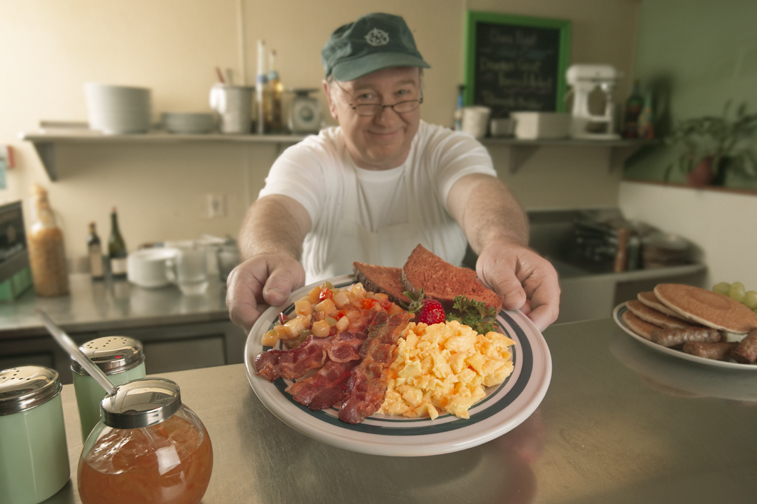
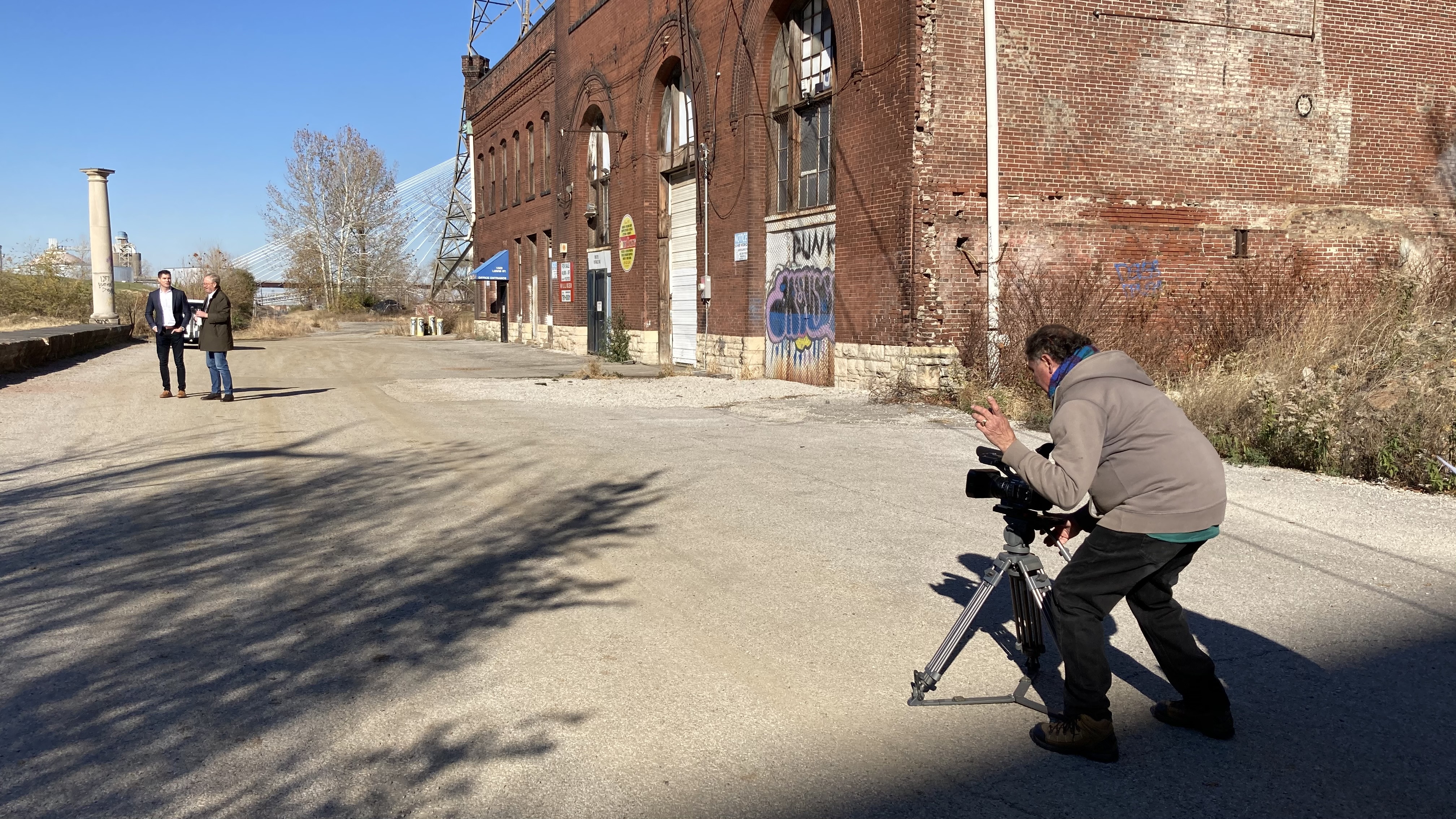
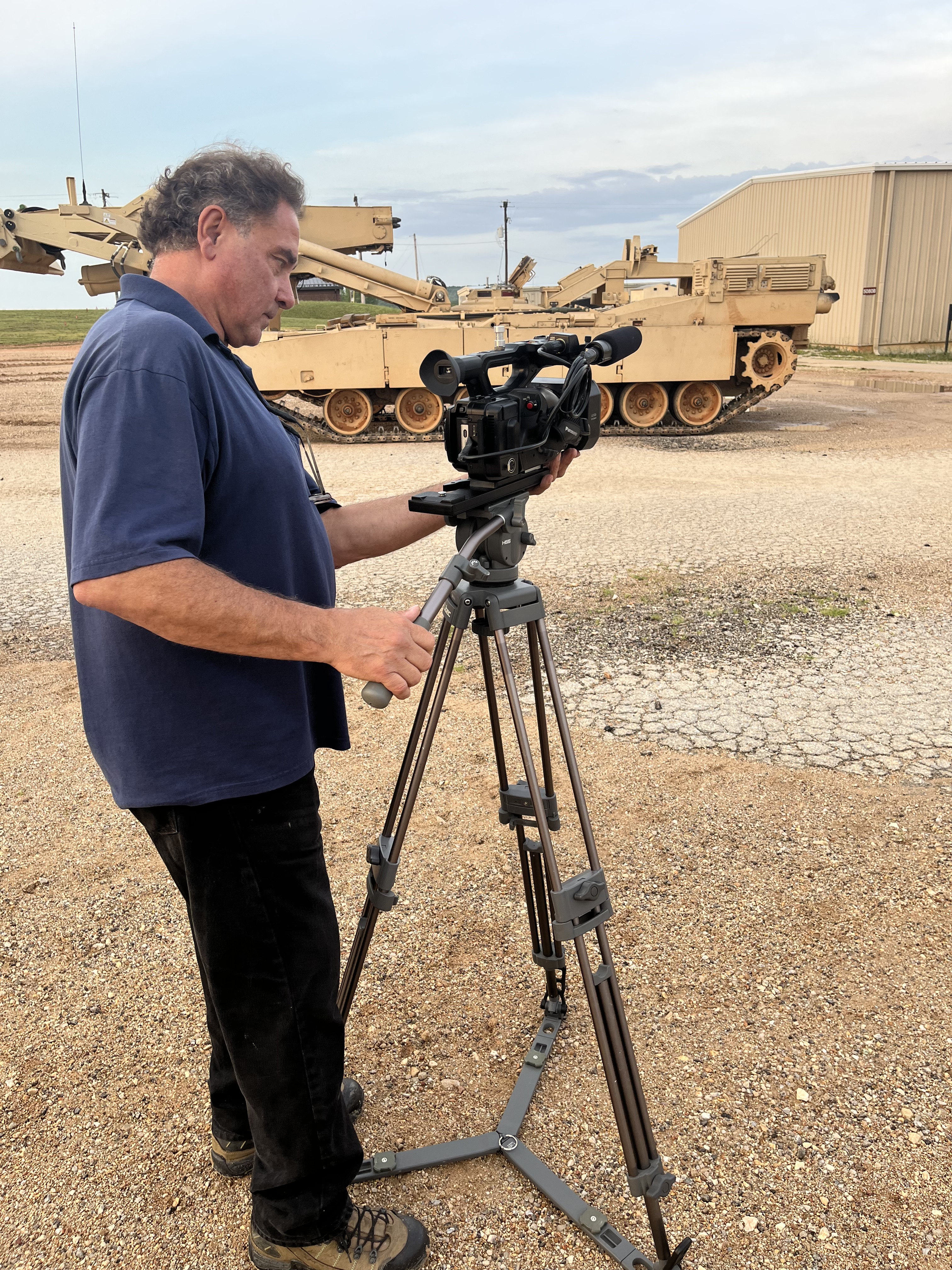
At St. Louis Video Production Studio, we’ve helped businesses, marketing firms, and creative agencies in the St. Louis area since 1982—and we know what it takes to turn service business video into real marketing performance: higher retention, stronger trust signals, and clearer calls to action.

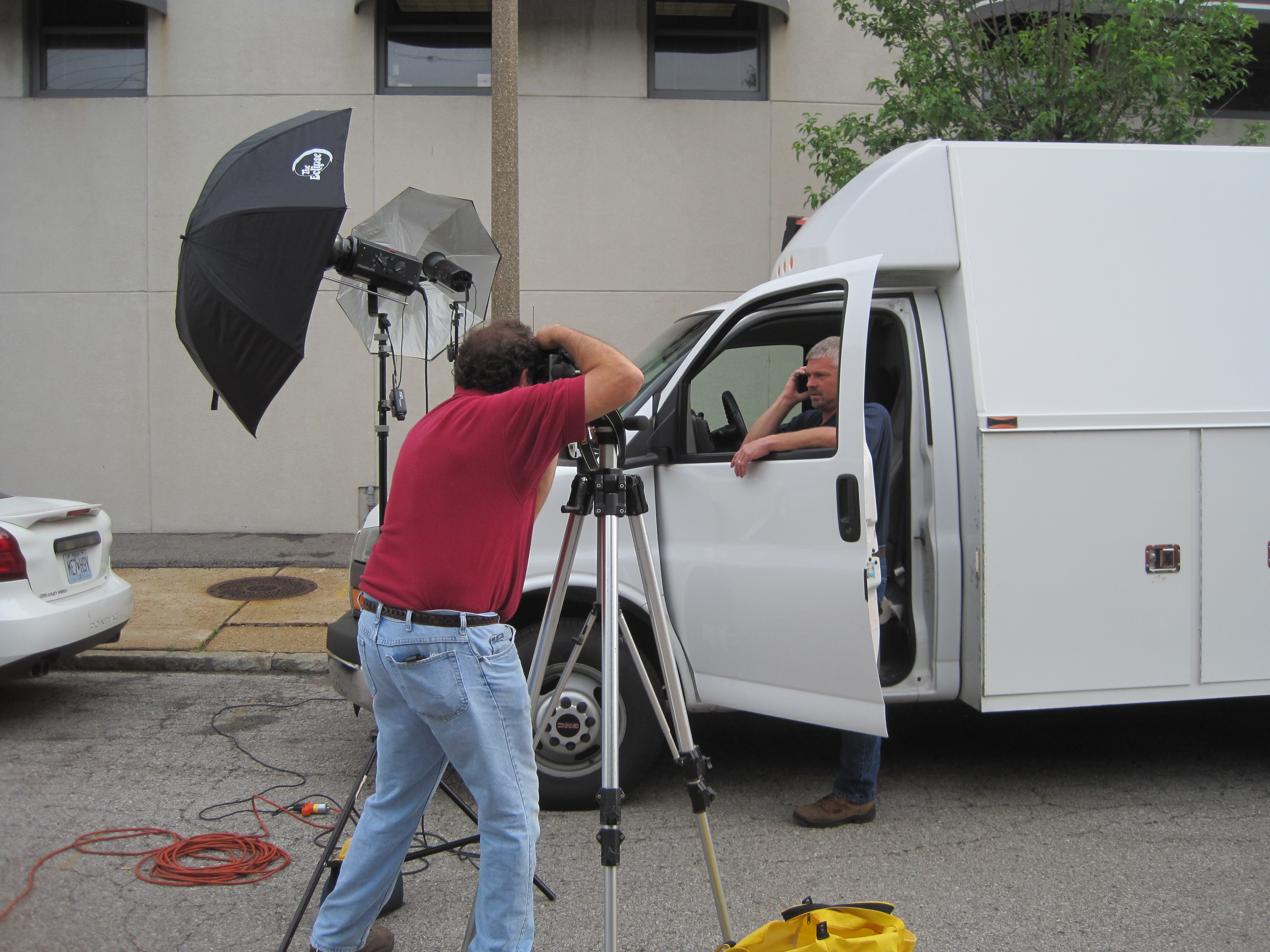
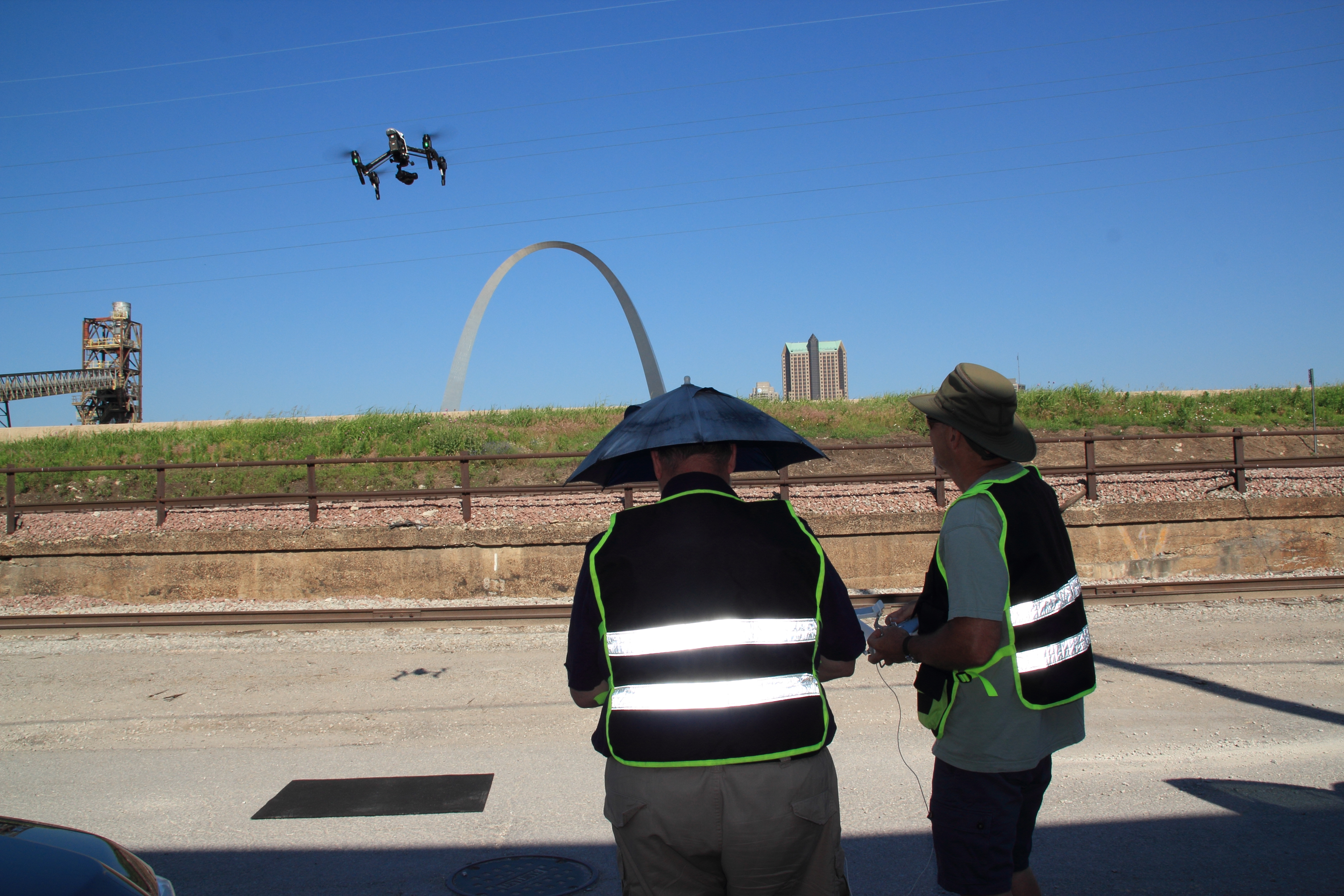
We’re a full-service professional commercial photography and video production company with the right equipment and creative crew service experience for successful image acquisition. We provide full-service studio and location video and photography, plus editing and post-production, and licensed drone support—including the ability to fly specialized drones indoors when your project requires dynamic visuals in tight spaces.

St. Louis Video Production Studio can customize your productions for diverse media requirements, and repurposing your photography and video branding to gain more traction is one of our specialties—so a single shoot becomes a full set of platform-ready assets. We’re well-versed in all file types, media styles, and the software ecosystems that modern marketing teams rely on. We also use the latest Artificial Intelligence tools to streamline editing, accelerate versioning, and deliver more usable content—faster—without sacrificing quality.

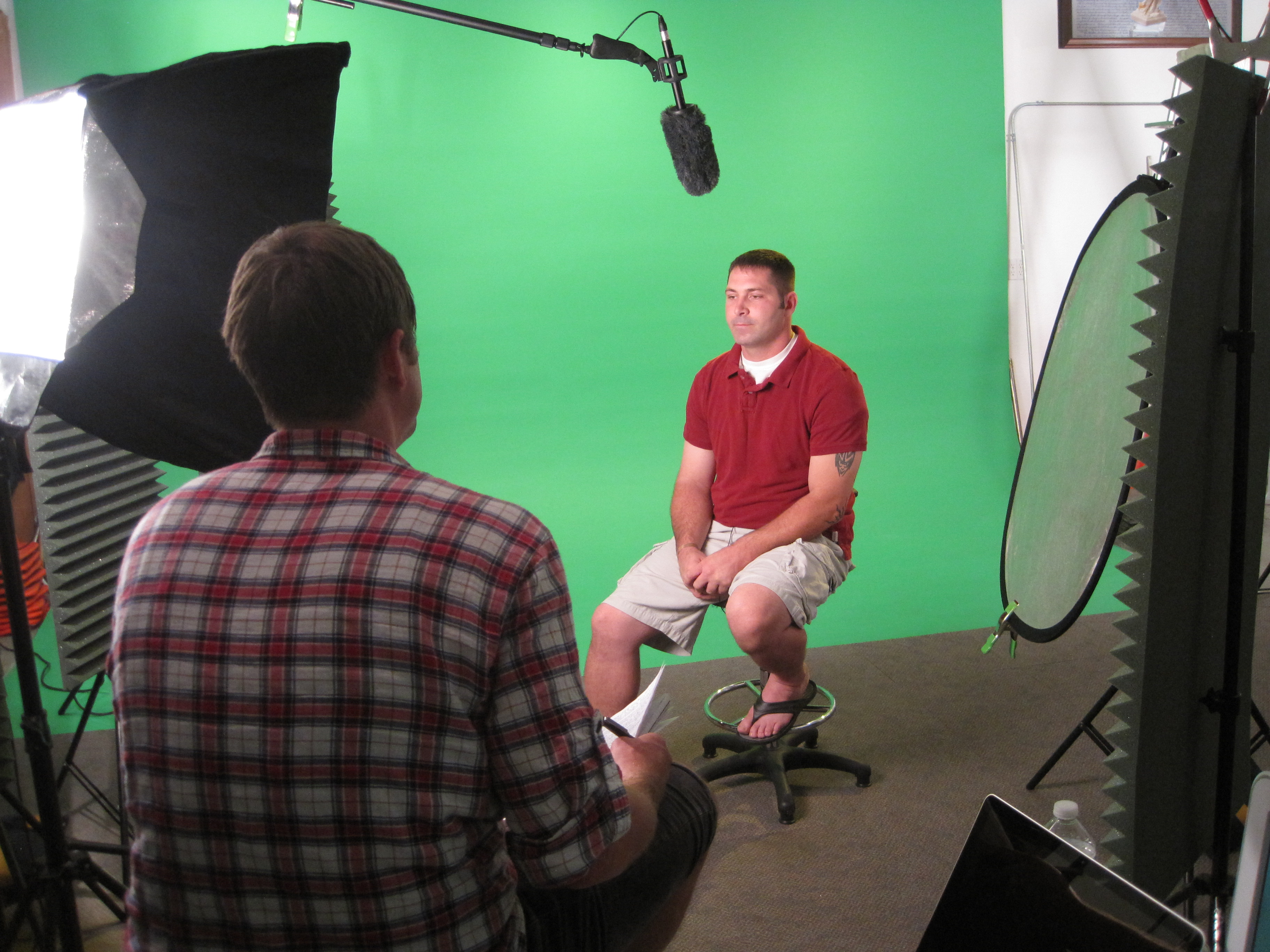
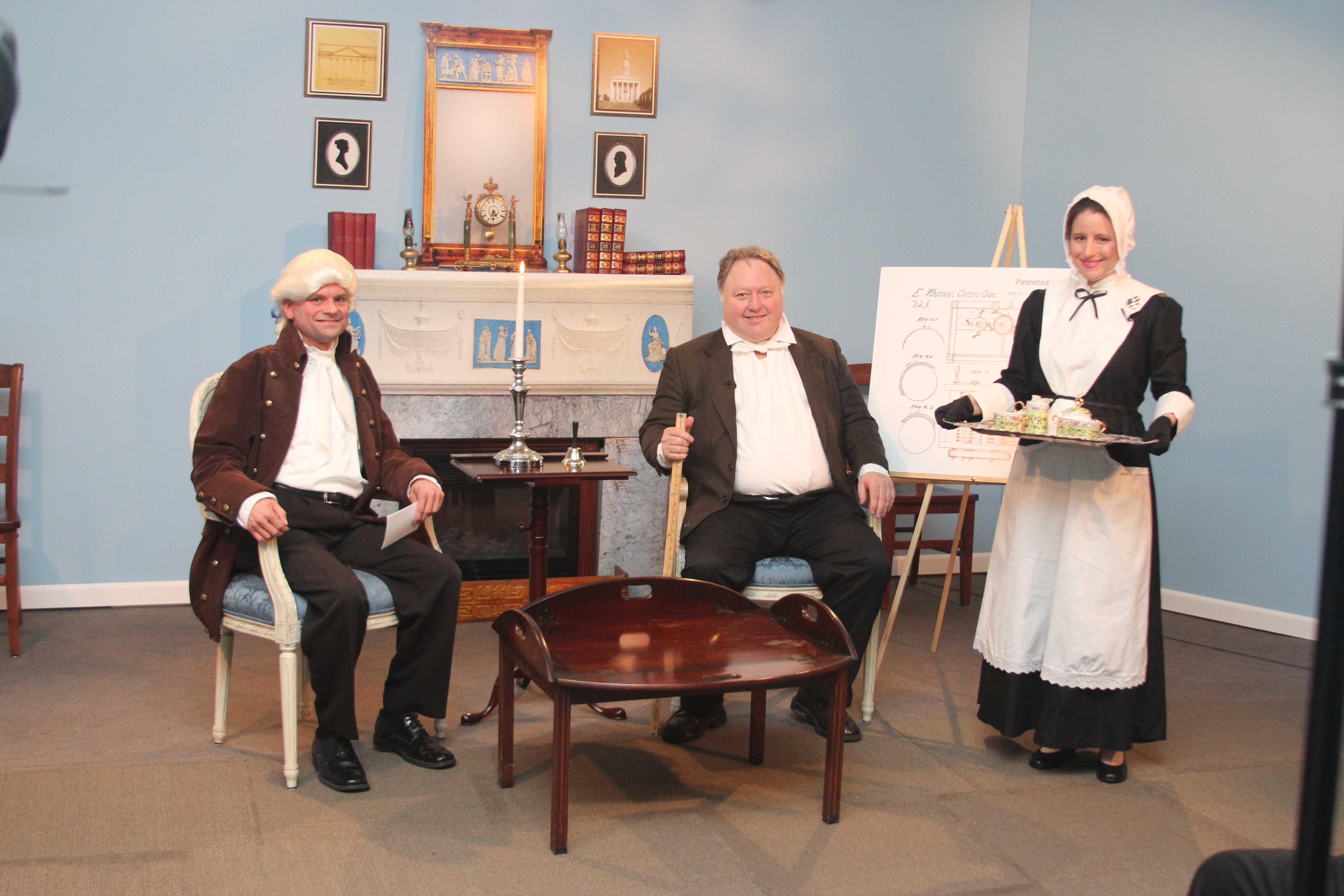
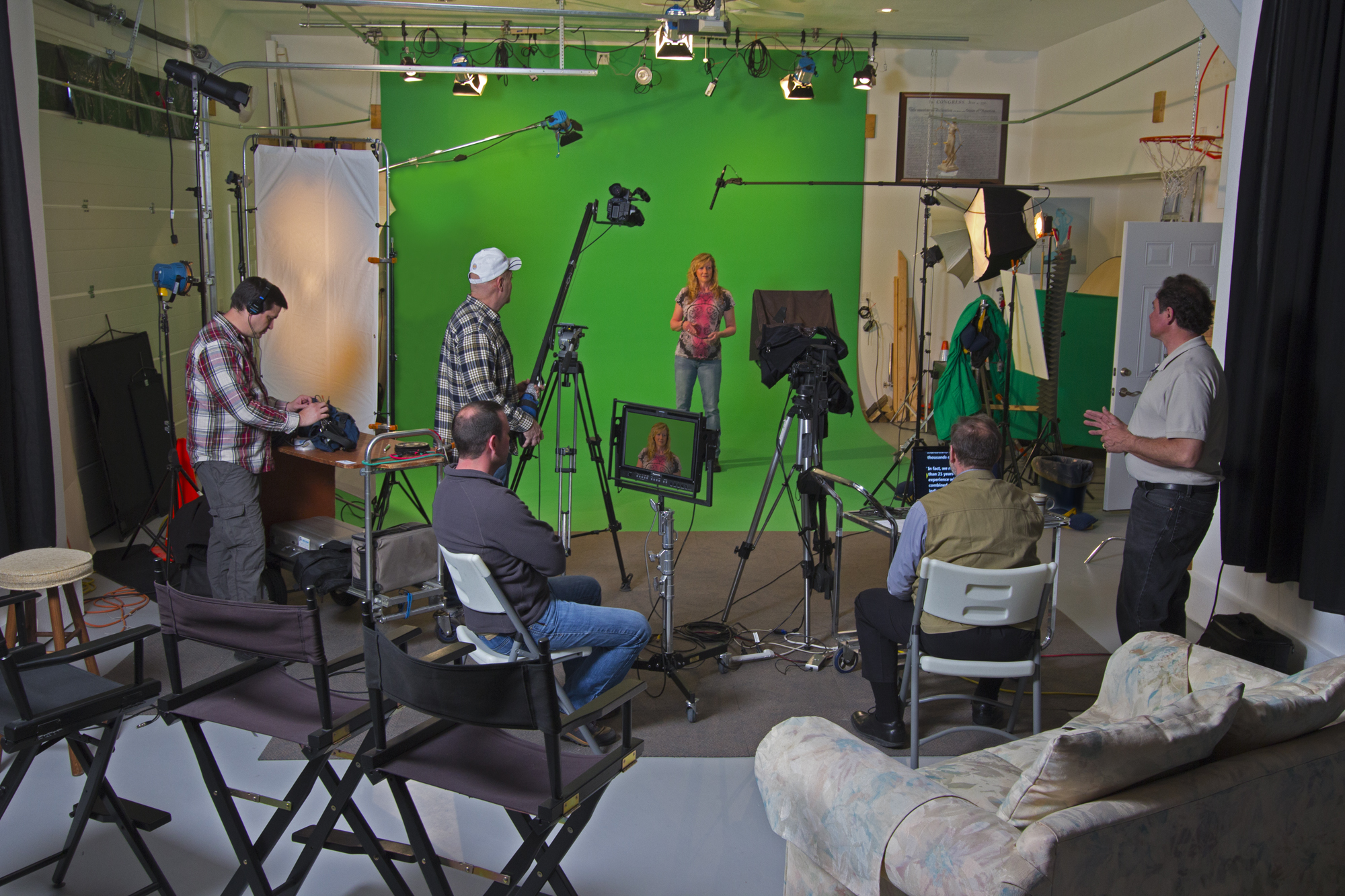
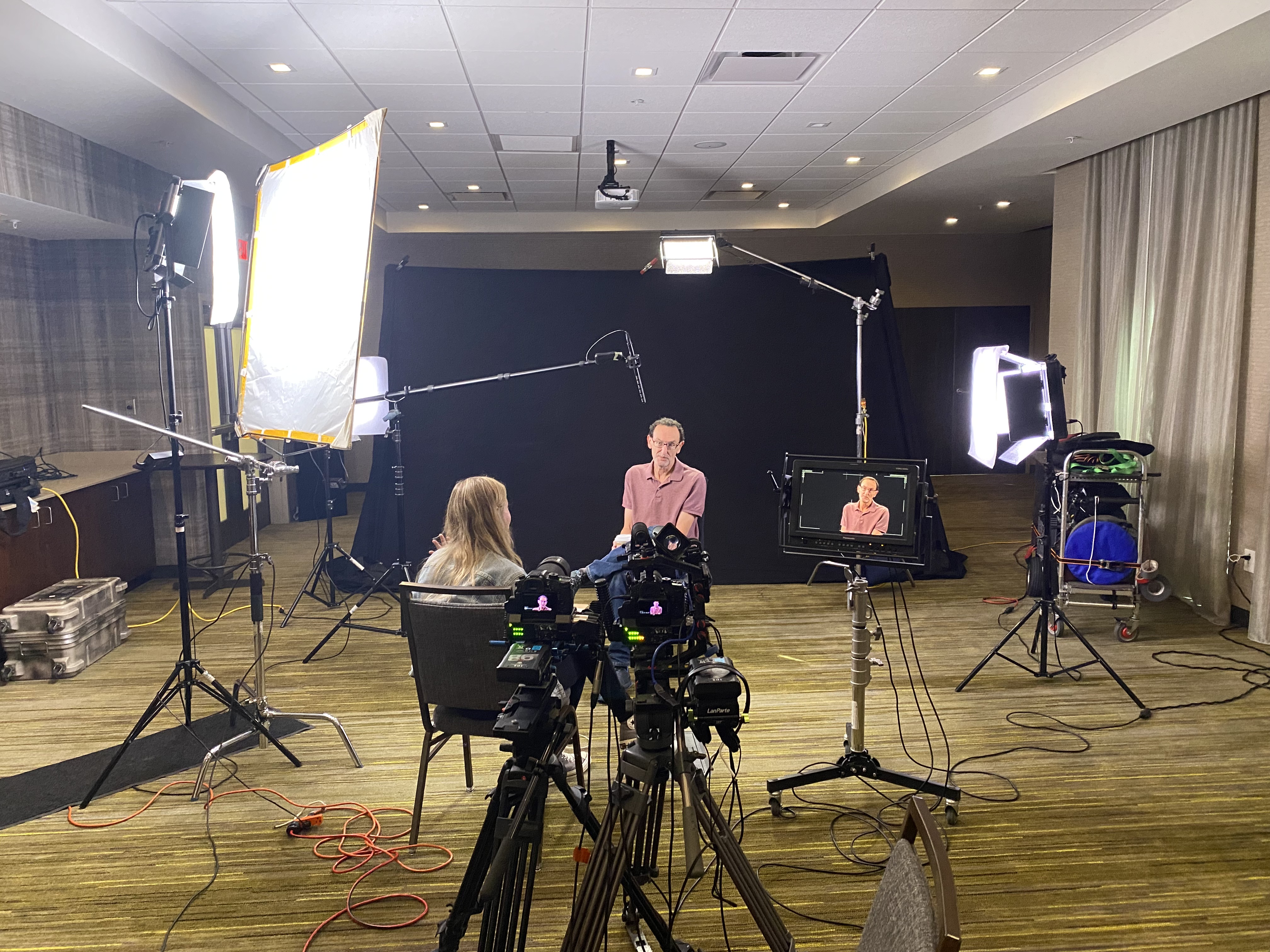
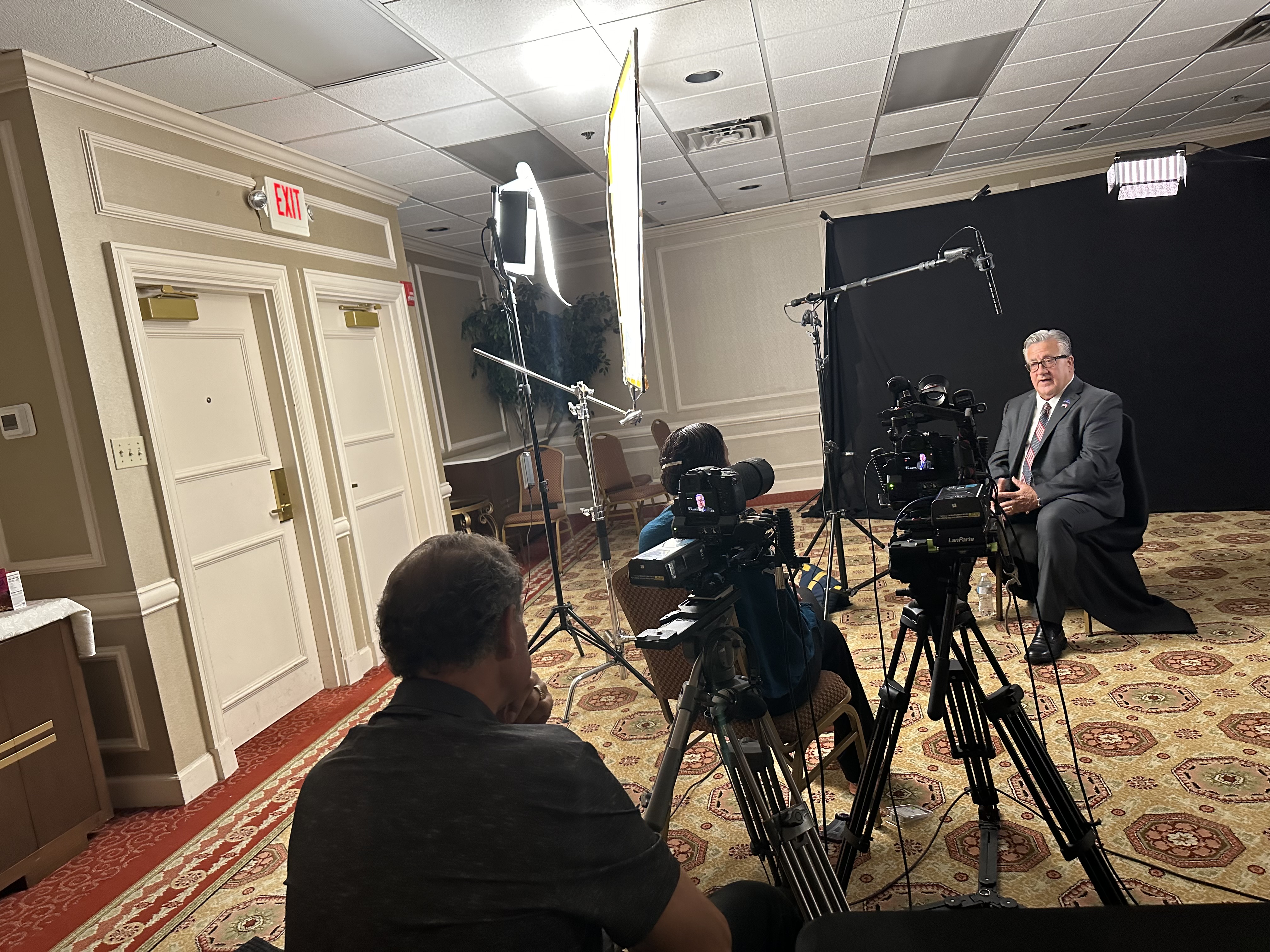
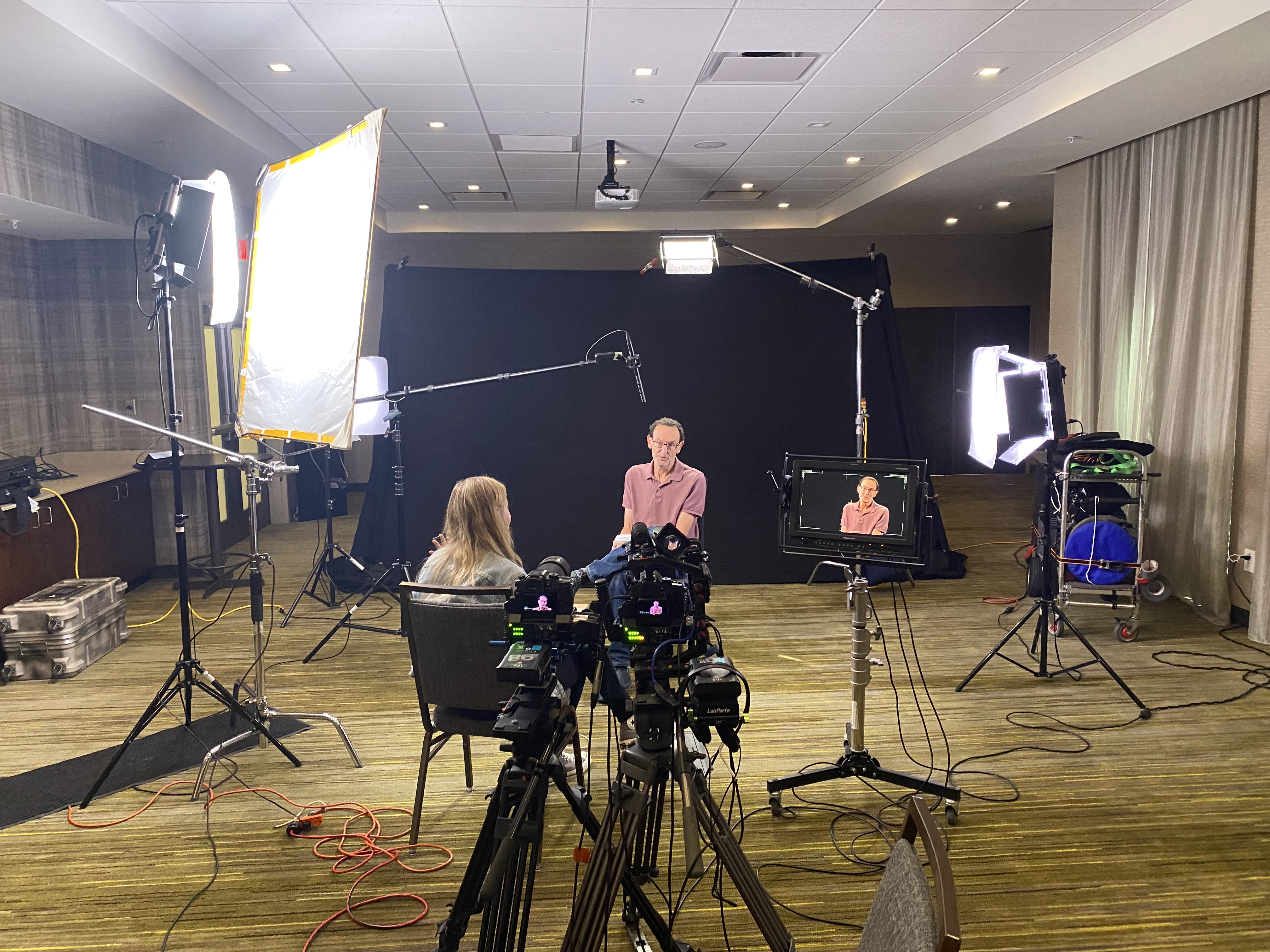
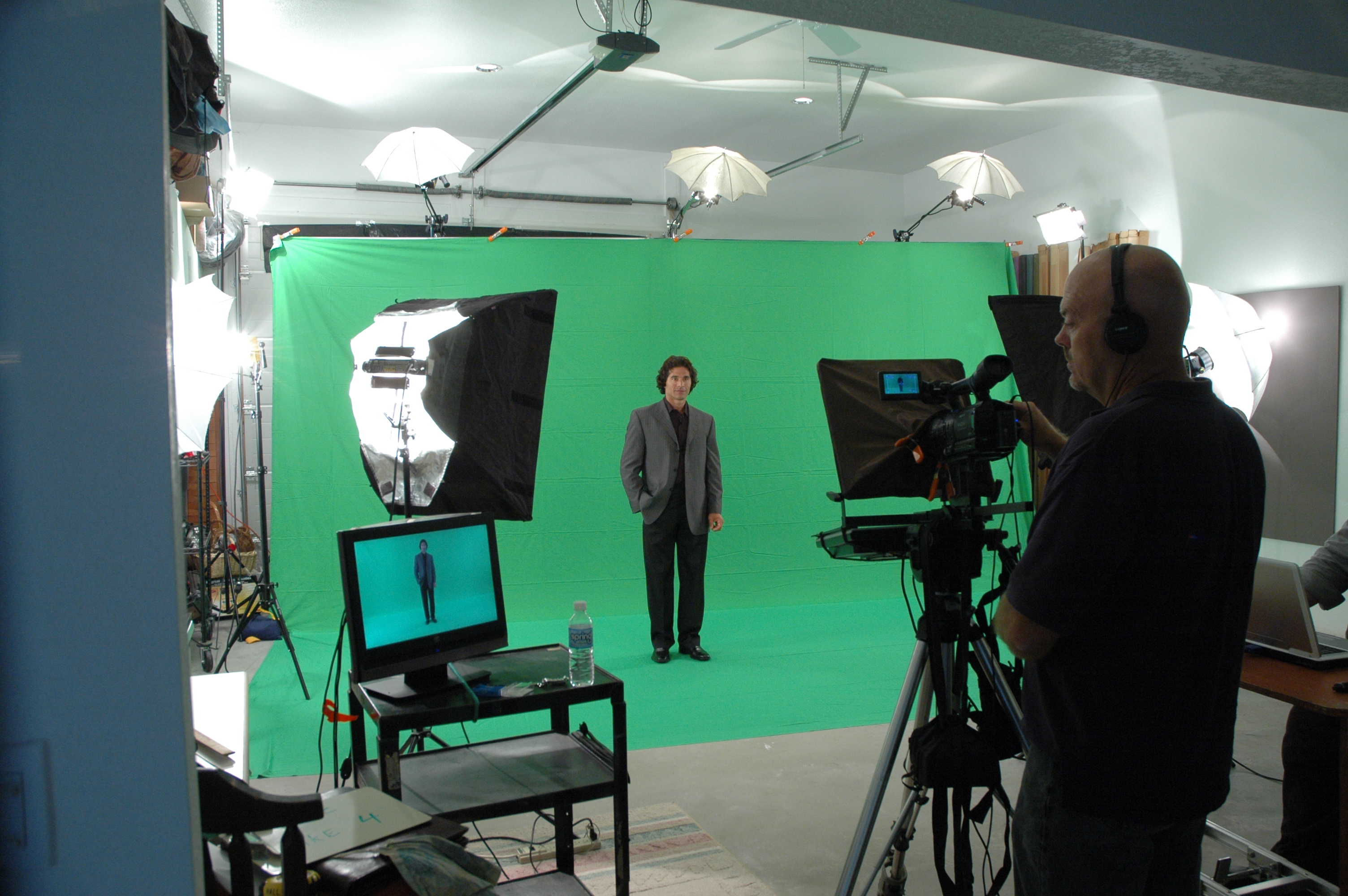
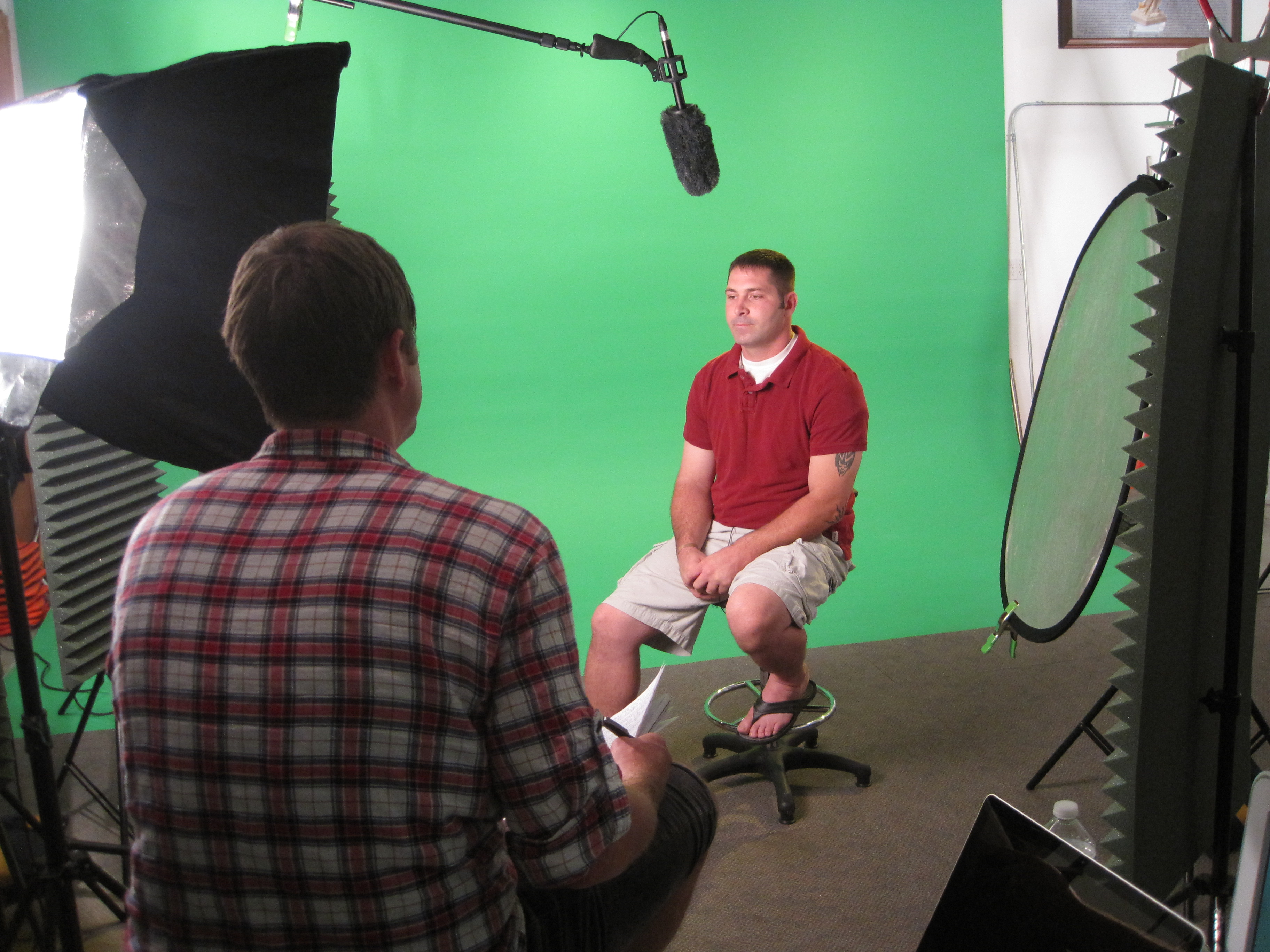
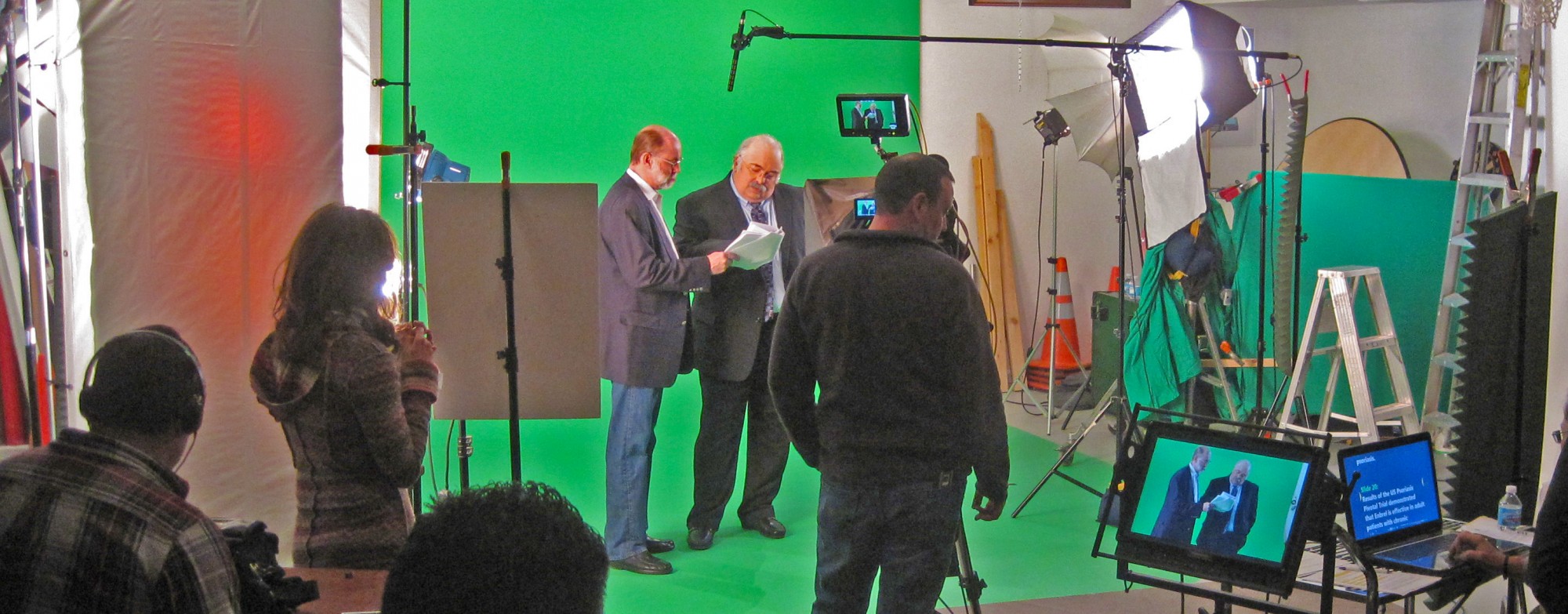
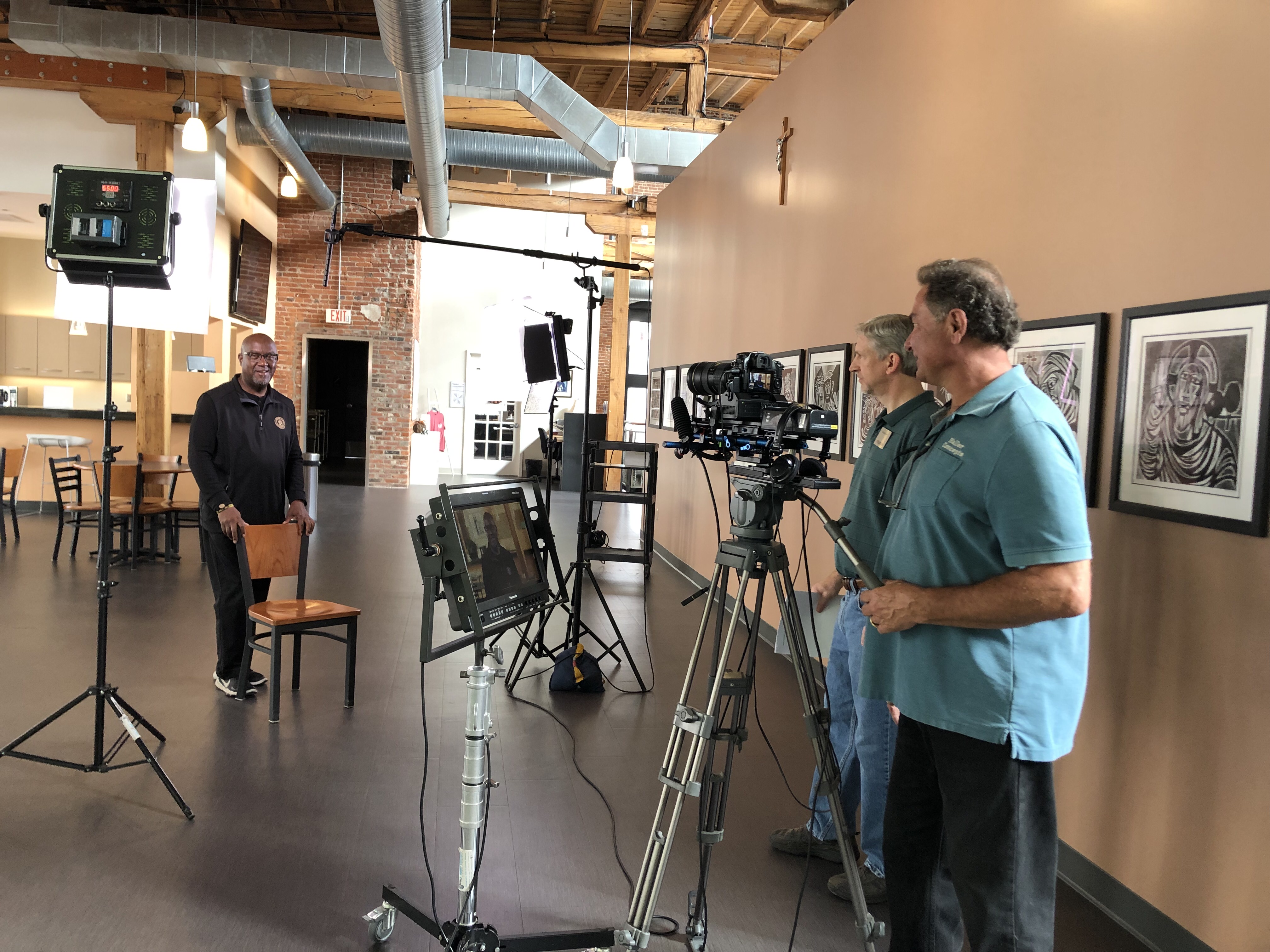
Our private studio lighting and visual setup is ideal for small productions and interview scenes, and our studio has room for props and set elements to round out your set. We support every aspect of your production—from setting up a private, custom interview studio to supplying professional sound and camera operators and the right equipment—so your next video production is seamless and successful.

If your videos are getting slow views, you don’t necessarily need “more content.” You need smarter structure, stronger hooks, better proof, and edits built for how people actually watch. That’s exactly what we do.

314-604-6544

saintlouismostudios@gmail.com

Don’t Be a Robot: Turn Teleprompter Reads into Natural Conversation

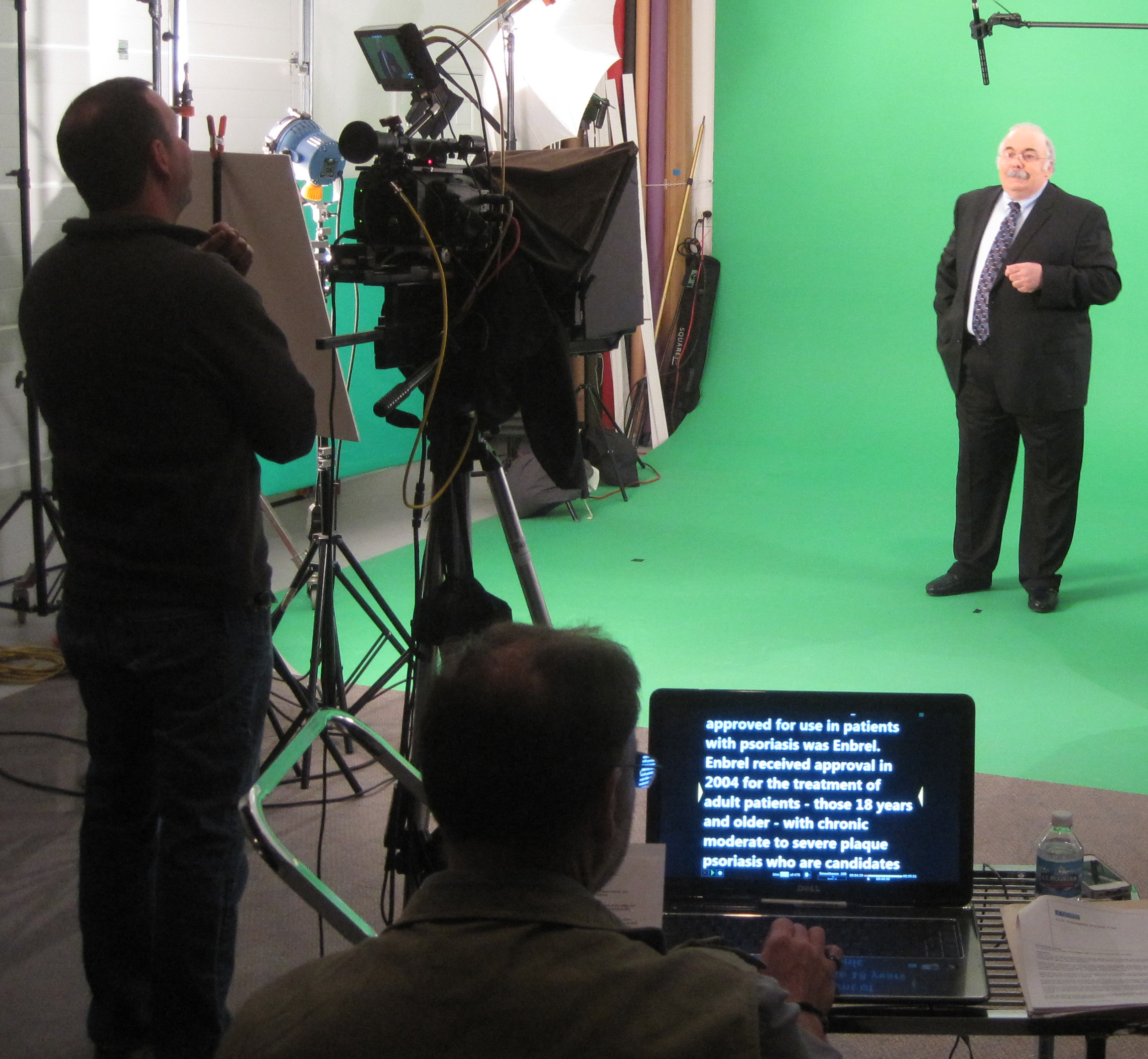
A teleprompter should make your leaders sound more human, not less. The trick isn’t “reading better”—it’s engineering the setup, script, scroll, and coaching so delivery feels like a hallway chat with perfect recall. Below is the studio-tested playbook we use to help executives and experts look relaxed, sound authoritative, and hit message + time—every time.


Outcomes That Matter to Decision Makers

  • Message control without wooden delivery: protect compliance language and brand voice while sounding spontaneous.
  • Throughput: more approved segments per day; fewer pickups; faster post.
  • Scalability: one message, consistent tone, multiple markets/languages.
  • Editorial efficiency: clean captions, transcripts, and translation pipelines.

1) Optics & Eye-Line: Authenticity by Design

Goal: keep the audience and the reader on the same visual axis.

  • Prompter: Through-the-lens (beam splitter) for direct-to-camera pieces.
  • Lens: 50–85 mm (full-frame) for flattering compression and reduced visible eye travel.
  • Distance & type size: talent at ~5–10 ft; font typically 48–72 pt—large enough to avoid scanning.
  • Scroll window: keep the active line near the center; avoid top/bottom edges that trigger saccades.
  • Glasses & glare: slightly raise the key light, tilt the glass a few degrees, add flags/hoods; matte frames help.

Walk-and-Talks
Compact prompter on a gimbal; pre-block stops/turns so the eye-line stays within a couple inches of the lens axis.


2) Script Engineering: Write for the Ear, Not the Page

Your copy should sound like it was born out loud.

  • Cadence target: 110–135 WPM for conversational corporate reads.
  • One idea per line: 12–18 words. Short clauses beat comma stacks.
  • Mark the “music”:
    • Cues: [PAUSE] [SMILE] [B-ROLL CUT] [GRAPHIC]
    • Phonetics inline for tricky names: kuh-TEG-uh-ree
    • Use emphasis sparingly; avoid ALL CAPS shouting.
  • Numbers that land: round when possible; put dense figures on graphics or VO over B-roll.
  • Version control: ExecUpdate_Q4_v9_APPROVED with a visible change log.

Before/After (Naturalization Pass)

  • Before: “Our strategic initiative leverages a robust ecosystem to drive efficiencies of 27.4 percent.”
  • After: “We’re cutting steps. On average, teams are working about a quarter faster.”

3) Scroll Craft: The Operator Follows the Speaker

A great operator is the difference between “reading” and sounding like yourself.

  • Follow, don’t force: speed matches the talent’s pace; use gentle accel/decel—no stair-steps.
  • Whitespace structure: blank lines between beats lower cognitive load and eye flicker.
  • Live edits: route all last-minute changes to a single owner—no dueling cursors.
  • Sightline hygiene: if eyes start to dart, enlarge type and re-center the active line.

4) Coaching Non-Actors: Small Levers, Big Gains

  • 90-second warm-up: hum on an “M,” then one throwaway read to settle pace.
  • Breath mapping: breathe at punctuation; commas = half-beat, periods = full beat.
  • Landing words: lengthen the key noun/verb a touch; let connector words glide.
  • Face & posture: feet planted, shoulders relaxed, chin level; carry a micro-smile through transitions.
  • Pickups: redo the entire sentence, not a fragment—editors need clean in/out points.
  • Wardrobe: avoid tight stripes, noisy jewelry; powder forehead/nose; keep the lav clear of necklaces.

5) Multi-Cam, Panels, Remote

  • A/B cameras: match prompter size and distance across angles or you’ll chase eye-lines in post.
  • Panels/interviews: use confidence monitors with talking points, not full sentences, to preserve interplay.
  • Remote execs: place overlay within 1–2 inches of the webcam lens; use wired controllers and rehearse inside the actual meeting platform to check latency.

6) Shoot for the Edit

  • Plan cover: script [B-ROLL CUT] and [GRAPHIC] beats so pickups are invisible.
  • Handles: roll 5 seconds before/after each take for clean transitions and caption sync.
  • Script-based editing: align approved copy with transcripts for legal/compliance traceability.

7) Troubleshooting: Fast Fixes On Set

  • Eyes darting: bump font size, re-center active line, slow the scroll.
  • Flat tone: insert micro-pauses, front-load verbs, add one human example/story.
  • Glare: adjust light angle first, then tilt glass and flag spill.
  • Rushed ending: add [HOLD SMILE 2s] to the last line and capture a clean button.

8) Day-Before & Day-Of Checklists

Day-Before

  • Final script (shared doc + PDF), pronunciations verified
  • Shot list with planned B-roll/graphics
  • Prompter/laptop/controller tested, mirror-flip confirmed
  • Wardrobe guidance sent; location light/sound pre-check

Day-Of

  • TTL prompter + hood, backup unit, UPS/power distro
  • Lens set 50/85 mm, flags/matte box, anti-glare wipes
  • Eye-line test (10 s), speed calibration pass
  • Confirm time targets, landing words, CTA phrasing

Copy-Paste Script Skeleton (≈2:00, 240–260 words)

OPEN [SMILE]
I’m [Name], [Title]. Today, three updates designed to help your team move faster and make smarter decisions. [PAUSE]

BENEFIT HEADLINE
First: [Feature/Program] cuts steps in [workflow], so your process is simpler, safer, and easier to scale. [B-ROLL CUT]

PROOF
Teams like [Client] saw results in weeks—not months—and reduced [metric] by [X%]. [PAUSE]

WHAT’S NEW
Second: [Feature] adds [capability], so admins spend less time on manual tasks.
Third: [Feature] improves [process] with clearer approvals and better visibility. [GRAPHIC]

CALL TO ACTION
If you’re on [plan], these roll out [date]. To learn more, visit your admin panel or talk with your account team. [SMILE]

CLOSE [HOLD 2s]
Thanks for choosing us to help you do more with less. [HOLD SMILE]


Why This Works

You’re not “reading” a script—you’re performing your own thoughts with precision. When optics, copy, scroll, and coaching are aligned, the teleprompter disappears and viewers hear a person, not a device.


Work With a Studio That Makes Prompters Invisible

St Louis Video Production Studio is a full-service professional commercial photography and video production company with the right equipment and creative crew service experience for successful image acquisition. We offer full-service studio and location video and photography, as well as editing, post-production and licensed drone pilots. St Louis Video Production Studio can customize your productions for diverse types of media requirements. Repurposing your photography and video branding to gain more traction is another specialty. We are well-versed in all file types and styles of media and accompanying software. We use the latest in Artificial Intelligence for all our media services. Our private studio lighting and visual setup is perfect for small productions and interview scenes. Our studio is large enough to incorporate props to round out your set. We support every aspect of your production—from setting up a private, custom interview studio to supplying professional sound and camera operators, as well as providing the right equipment—ensuring your next video production is seamless and successful. We can fly our specialized drones indoors. As a full-service video and photography production corporation, since 1982, St Louis Video Production Studio has worked with many businesses, marketing firms and creative agencies in the St. Louis area for their marketing photography and video.

314-604-6544

saintlouismostudios@gmail.com

Keep It Tight: How to Make Short Interviews That People Actually Watch

When an interview video drags, the audience doesn’t just lose interest—they miss your message. In B2B marketing, attention is a scarce commodity, so the mandate is simple: be brief, be clear, be watchable. Here’s the playbook we use at St Louis Video Production Studio to keep interviews engaging, short, and conversion-focused—without sacrificing depth or professionalism.


The Business Case for Short Interviews

Short wins when:

  • You need top-of-funnel awareness and fast clarity.
  • Buyers skim on mobile and make snap judgments about credibility.
  • You’ll repurpose across web, email, LinkedIn, YouTube, and vertical social.

Working runtime targets (by intent & channel):

  • Website / Landing page hero: 60–90 sec
  • LinkedIn post: 45–75 sec
  • Paid social cutdowns: 15–30 sec
  • YouTube (consideration pages, product explainer): 60–120 sec (only stretch past 2 minutes if you’re showing hard proof)

Structure: The 60–90 Second Interview Blueprint

Think of your interview like a trailer for your value proposition:

  1. Hook (0–5s) – A result, bold claim, or pain point stated in the buyer’s language.
    “We cut onboarding from three weeks to two days.”
  2. Context (5–20s) – Who you are + why it matters.
    “I lead operations at Acme; our clients struggled with…”
  3. Proof (20–60s) – 2–3 hard specifics (metrics, demo visuals, customer outcome).
    “Error rates fell 41%. Here’s how the workflow changed.”
  4. Action (60–90s) – What the viewer should do next.
    “Book a 15-minute walkthrough” or “Download the spec sheet.”

Guardrails: One idea per sentence. One proof per idea. Anything that doesn’t serve the hook, proof, or action is a candidate for the cutting room floor.


Pre-Production: Design for Brevity

Define the single conversion goal before you roll. Each question must ladder to that goal.

Write prompts, not scripts. Scripts create stiff reads; prompts create truthful, tight answers.

  • “Give me the headline in one sentence.”
  • “What changed—precisely?”
  • “What metric proves it?”
  • “What should someone do today after watching this?”

Prep your subject to be concise. Share this answer format:

  • Headline → Proof → One concrete example → CTA (10–20 seconds total).

Block time for cutaways. Even short interviews need visual proof: dashboards, hands-on product use, customer interaction, environment establishing shots. Plan W–M–T (wide/medium/tight) passes for each proof point so the edit flows without filler.


On-Set: Coaching for Short, Watchable Answers

  • “One breath” rule: If an answer is longer than one breath, it’s two answers—ask for a tighter version.
  • Interrupt with purpose: “That’s great—can you give that to me in one sentence?”
  • Ask for the number: “What improved, and by how much?”
  • Echo & sharpen: Repeat the subject’s best phrase and ask them to restate it cleanly.
  • Mark keepers on the slate or audio notes to speed the edit.

Framing & lighting that flatter brevity

  • Eye line just off lens; keep backgrounds simple and branded.
  • Soft key + gentle negative fill to sculpt.
  • Lock white balance; avoid mixed color temps that slow grading.
  • Capture NAT sound beds (keystrokes, machinery) for transitions under cutaways.

Editorial Tactics That Boost Retention

  • Lead with the answer. Don’t bury the headline.
  • J-cut your next idea under the last word so the video never “lands” on a static shot.
  • Cut on movement (hand gestures, page turns) to hide trims.
  • Pattern interrupt every 7–10 seconds: angle change, cutaway, graphic callout, or bold caption.
  • On-screen text: 8–12 words max per card; write like a billboard.
  • Captions by default for mobile and silent autoplay.
  • Music minimalism: underscore, not a pop single—let clarity win.

Color & sound polish

  • Neutral skin tones first, brand-hue secondaries second.
  • Transparent noise reduction; a touch of surgical EQ for articulation.
  • Loudness matched for platform norms; keep dynamics natural.

The “Kill List”: What to Cut Without Mercy

  • Corporate preambles: “Thank you for having me…”
  • Role recitations longer than a clause.
  • Vague adjectives without metrics: “robust,” “innovative,” “industry-leading.”
  • Redundant restatements. Say it once, crisply.
  • B-roll of empty hallways and random office plants.

Packaging for Multi-Channel Use

From a single 60–90 second master, plan:

  • 1× master (landings, YouTube)
  • 2–3× 15–30s cutdowns (paid social)
  • 3–5× 6–10s vertical hooks (stories, TikTok, Shorts)
  • Thumbnails: subject’s face + 2–3 word benefit (“2-Day Onboarding”)
  • Accompanying copy: one-line promise + one data point + CTA link

Aspect ratios: Capture clean frames for 16:9, 1:1, and 9:16. Keep text and faces inside a 4:5 safe box so vertical crops don’t lose key info.


Metrics That Matter (and realistic targets)

  • Hook rate (3-second hold): Did we stop the scroll?
  • Midpoint retention (50% mark): Aim 45–65% for well-targeted B2B.
  • CTA clicks or booked calls: The real win.
  • Reuse velocity: How many teams used the asset? (Sales, CS, HR recruiting.)

Use these signals to iterate your next batch of interviews: if midpoint retention dips, tighten the proof section and add a visual change earlier.


How We Use AI—Responsibly—to Speed Quality

  • Transcription & paper edits: Rapidly surface quotable moments; map B-roll to lines.
  • Auto-captions & brand templates: Faster packaging in multiple aspect ratios.
  • Filler-word & silence detection: Tightens cadence without harming authenticity.
  • Noise cleanup & dialogue enhancement: Cleaner speech from challenging spaces.
  • Visual cleanup (where permitted): Remove stray logos, fix flicker, stabilize micro-jitters.

Human editorial judgment remains the final pass—AI accelerates, we direct.


A Sample Half-Day Interview Sprint (Efficient & Short)

  1. 0:00–0:30 Lighting/audio, white balance lock, framing.
  2. 0:30–1:15 Interview capture (primary + safety angle).
  3. 1:15–2:30 B-roll proof passes (W–M–T) for each claim.
  4. 2:30–2:45 Vertical-safe pickups for social.
  5. 2:45–3:00 NAT sound beds, thumbnails, safety pickups.
  6. Post Paper edit → selects → captions/graphics → color/sound → masters & cutdowns.

Ready to Keep It Short—and Effective?

St Louis Video Production Studio is a full-service professional commercial photography and video production company with the right equipment and a creative crew seasoned in successful image acquisition. We offer full-service studio and location video and photography, plus editing and post-production, and our licensed drone pilots can even fly specialized drones indoors for dynamic, safe perspectives.

We customize productions for diverse media requirements and repurpose your photography and video branding to extend your reach. Our team is well-versed in all file types, media styles, and accompanying software, and we use the latest in Artificial Intelligence across our media services to move faster without compromising quality. Our private studio lighting and visual setup is perfect for small productions and interview scenes, and our studio is large enough to incorporate props to round out your set.

From building a private, custom interview studio to supplying professional sound and camera operators and the right equipment, we support every aspect of your production to ensure your next video is seamless and successful. As a full-service video and photography production corporation since 1982, St Louis Video Production Studio has partnered with businesses, marketing firms, and creative agencies throughout the St. Louis area to deliver marketing photography and video that performs.

Let’s make your next interview short, watchable, and effective.

314-604-6544

saintlouismostudios@gmail.com

Guidelines to Boosting Engagement in Training Videos

In today’s fast-paced business environment, training videos have become an essential tool for educating employees, engaging clients, and sharing company processes. However, to truly be effective, training videos must do more than just present information—they must engage viewers, facilitate learning, and promote retention. As an experienced videographer and photographer at St. Louis Video Production Studio, we understand that the key to creating engaging training videos lies in following a set of best practices that elevate the viewer experience and improve outcomes. Below are some guidelines to boost engagement in your next training video.

Keep your content dynamic by using varying shot compositions, scene transitions, and editing techniques.

1. Keep it Focused and Concise

When it comes to training videos, brevity is crucial. Viewers often have limited attention spans, and lengthy, drawn-out content can result in disengagement. Focus on delivering key information in bite-sized segments. Aim for videos that are concise, with each segment targeting one specific learning objective. Break down larger topics into multiple videos to prevent overwhelming your audience, and make it easy for them to navigate to the information that matters most.

2. Incorporate Visuals to Reinforce Key Concepts

Humans process visual information faster than text, so incorporating visuals into your training videos is a powerful strategy. Use high-quality images, infographics, and on-screen text to reinforce the points being made in your narration. Additionally, animations or screen captures can help break down complex information, making it more digestible for viewers. The use of compelling visuals not only enhances learning but also helps keep the audience engaged throughout the video.

3. Tell a Story

One of the best ways to keep viewers engaged is to incorporate storytelling into your training videos. People are naturally drawn to stories, and weaving in relatable scenarios helps make abstract concepts more concrete. Whether it’s a success story, a problem-solving scenario, or a case study, storytelling engages emotions, making the learning experience both enjoyable and memorable.

4. Interactive Elements

Consider adding interactive elements to your training videos. These could be in the form of quizzes, polls, or decision-based branching scenarios. Interactive videos create a more engaging experience by inviting the viewer to actively participate, rather than passively watch. This can significantly enhance learning, as viewers are more likely to retain information they’ve actively engaged with.

5. High-Quality Audio and Visuals

One of the most important aspects of any video is its quality. Poor video or audio quality can quickly turn off viewers, making them less likely to absorb the material presented. Ensure your video is shot in high definition, with proper lighting and sound. Our private studio lighting setup at St. Louis Video Production Studio is designed to create professional-quality visuals, ideal for small productions and interview scenes. Clear, crisp audio, along with clean visuals, sets the stage for an immersive and effective training experience.

6. Keep the Pace Moving

A slow-paced video can quickly become boring, while a fast-paced one can leave viewers struggling to keep up. The key to engagement is maintaining a rhythm that allows viewers to absorb information without losing their interest. Keep your content dynamic by using varying shot compositions, scene transitions, and editing techniques. A combination of close-ups, wide shots, and smooth transitions will keep the video flowing naturally, making it more enjoyable for the viewer.

7. Use Real-Life Examples and Demonstrations

Theory can often be dry and difficult for viewers to relate to. By using real-life examples and practical demonstrations, you can help the audience understand how the training applies to their own work. Hands-on examples help ground the material, making it more relatable and engaging. A strong example will also help reinforce key concepts and show how they can be applied in real-world situations.

8. Provide Clear Instructions and Summaries

At the start of the video, provide an outline of the objectives so viewers know what to expect. After each section, summarize the main takeaways, and ensure the conclusion clearly recaps the overall lesson. This reinforces the key points, helping viewers retain information more effectively.

9. Repurpose Your Content for Better Reach

One of the biggest advantages of training videos is their ability to be repurposed. Repurpose your training videos into smaller clips or create supplementary materials, like infographics or slideshows, to reinforce the learning. You can also share shorter excerpts or highlights on social media to increase engagement and reach a wider audience. At St. Louis Video Production Studio, we specialize in repurposing video and photography content to optimize engagement and ensure that it reaches the right people at the right time.

10. Provide a Personal Touch

One of the most powerful ways to engage viewers is by making the training feel personal. Consider incorporating interviews or testimonials from employees, leadership, or subject matter experts to add depth and authenticity. Personalized videos where the instructor addresses the viewer directly also create a connection, making the experience feel more interactive.


Why St. Louis Video Production Studio is Your Partner for Engaging Training Videos

Creating engaging training videos requires more than just following guidelines; it requires the right tools and expertise. At St. Louis Video Production Studio, we are a full-service professional commercial photography and video production company with decades of experience. Since 1982, we have been working with businesses, marketing firms, and agencies in the St. Louis area, helping them produce high-quality training videos that resonate with audiences.

Our team includes experienced sound and camera operators, directors, and an entire creative crew capable of bringing your vision to life. With our private studio lighting and setup, we can cater to small productions and interview scenes with ease. We offer a variety of services, from location video and photography to editing and post-production. We also have licensed drone pilots, capable of flying specialized drones indoors, adding a unique touch to your production.

At St. Louis Video Production Studio, we are well-versed in all file types and media styles, and we work with the latest software to ensure your content looks its best across all platforms. Whether you need a custom interview studio setup, sound and camera equipment, or a tailored production plan, we have the expertise to deliver. Our ability to repurpose your video and photography branding helps your content gain more traction and reach the right audience. Trust us to make your next training video production both engaging and successful.

Let us help you elevate your training materials with professionally produced, engaging videos that not only inform but also inspire action. Contact St. Louis Video Production Studio today to begin your journey toward better, more impactful training videos.

314-604-6544

saintlouismostudios@gmail.com