Tag Archives: Short Films

What to Wear for a Sit-Down Interview That Looks Great on Camera: A Professional’s Guide to On-Camera Wardrobe Success

When preparing for a sit-down interview, the spotlight isn’t just on what you say—it’s also on how you look. For businesses and organizations investing in high-quality video production, ensuring interview participants are dressed appropriately for the camera can significantly impact the final result. A well-chosen outfit enhances the subject’s credibility, helps maintain visual continuity, and ensures the viewer stays focused on the message, not distracted by the wardrobe.

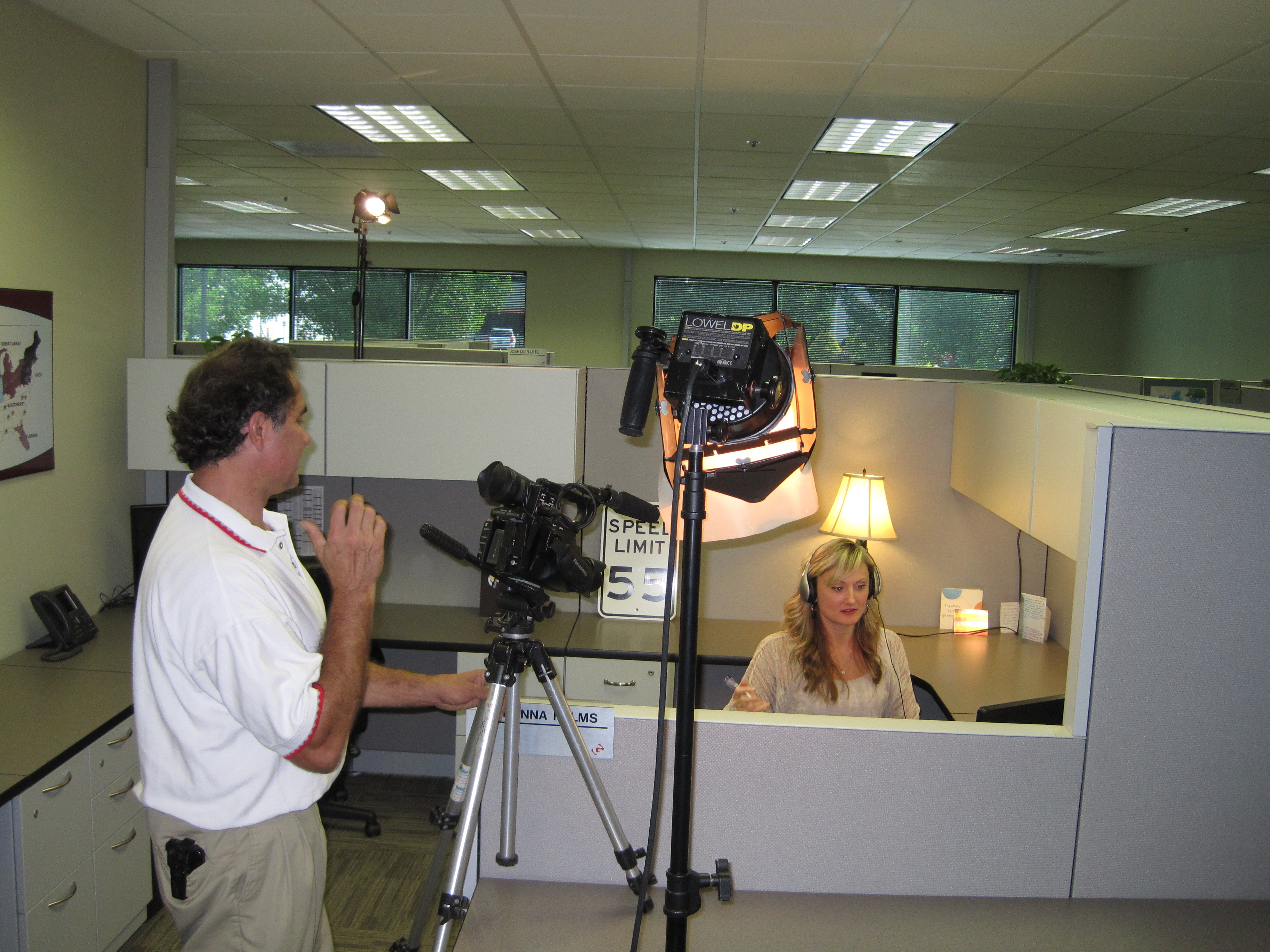
As experienced producers, videographers, and photographers at St Louis Video Production Studio, we’ve seen firsthand how smart wardrobe planning can elevate the visual storytelling of your marketing, testimonial, or corporate video. Here’s our expert guide on what to wear—and what to avoid—for a sit-down interview that looks professional and polished.


1. Choose Solid Colors Over Patterns

Busy patterns like stripes, plaids, houndstooth, or tight checks can create a distracting effect on camera called moiré, where the pattern flickers or appears to move. Instead, opt for solid, medium-tone colors. Earthy hues, blues, purples, and jewel tones tend to read well under studio lighting.

Avoid: Bright whites (which can blow out on camera), deep blacks (which can lose detail), and neon shades (which can reflect on skin and nearby surfaces).


2. Dress for the Setting and the Brand

Wardrobe should reflect the tone of your business and match the visual aesthetic of your brand. If your brand is casual and approachable, an open-collar shirt or blouse might be ideal. For a more corporate tone, a tailored blazer or professional dress is better suited.

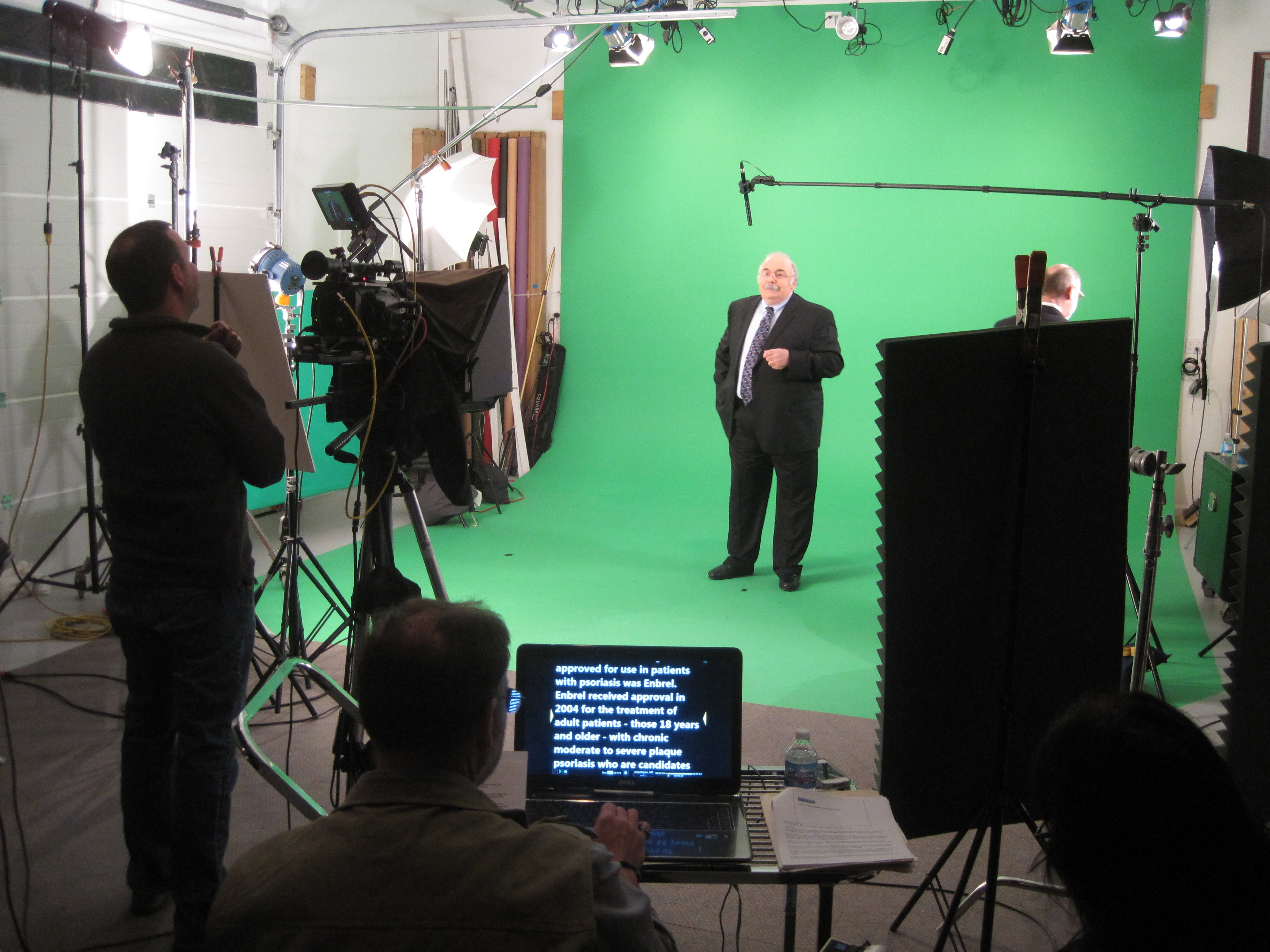
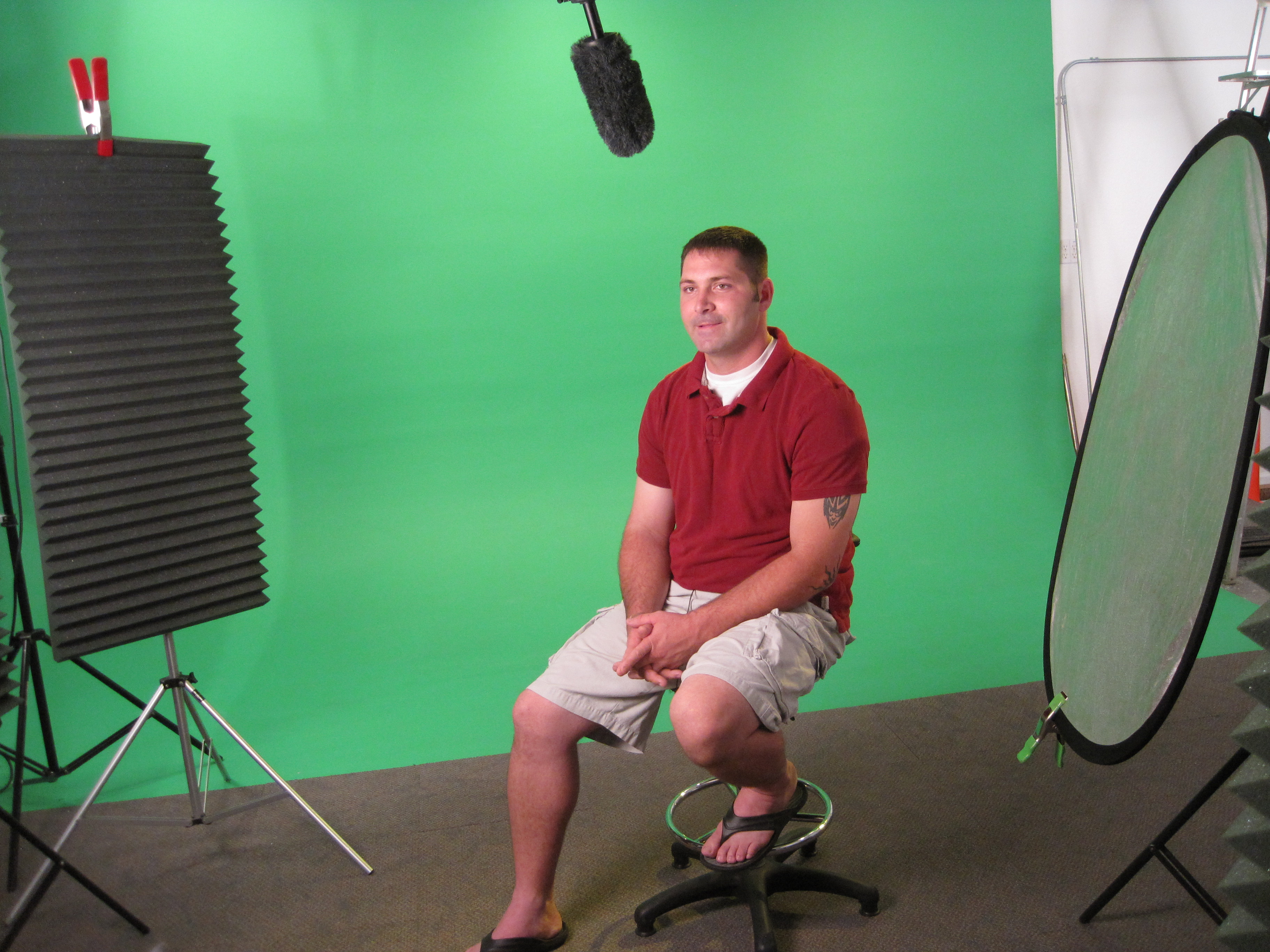
Pro Tip: Always consider the backdrop. If you’re being filmed on a green screen, avoid green. If the set includes cool gray or blue tones, wear complementary colors for visual harmony.


3. Layering Adds Depth

Adding a blazer, jacket, or cardigan can give your look structure and add visual interest without being overpowering. Layers also provide options—if one layer doesn’t work under studio lights, we can adjust quickly.


4. Avoid Distracting Accessories

Jewelry that jingles or sparkles can distract the viewer and potentially interfere with audio. Simple, non-reflective, and subtle accessories work best. Likewise, avoid clothing with logos or visible branding unless it aligns with your company’s message.


5. Mind Your Fit

Loose or oversized clothing can appear sloppy, while tight-fitting clothes can be uncomfortable or unflattering under studio lights. Choose well-fitting garments that allow you to sit comfortably while maintaining a clean silhouette.


6. Hair and Makeup Tips

Shiny skin and flyaway hairs are more noticeable under professional lighting. Even for men, a dab of powder or oil blotting sheets can help maintain a matte look on camera. Hair should be tidy and styled with intention.


7. Prepare for Mic Placement

Avoid clothing that might make it difficult to place a lavalier mic—such as turtlenecks, scarves, or extremely loose necklines. Button-up shirts or blouses with collars are ideal for securely clipping a mic close to your voice source.
8. Bring Options

If possible, bring one or two additional outfits. Our production team at St Louis Video Production Studio can provide feedback on what works best with the set, lighting, and your message. It’s always better to have options than to be stuck with an outfit that doesn’t work on screen.


Final Thoughts: Dress with Purpose, Confidence, and the Camera in Mind

A sit-down interview is your moment to shine—professionally, confidently, and authentically. The right clothing ensures your message is received without distraction, your appearance supports your brand, and your presence commands the screen.

At St Louis Video Production Studio, our experienced producers and creative crew understand every detail that goes into successful image acquisition—from camera framing and lighting to how your wardrobe interacts with the scene. We offer full-service video and photography solutions, including custom interview setups in our private studio, location filming, and indoor drone videography. Our team is well-versed in file types, editing, and AI-enhanced post-production.

Whether you’re representing your company in a testimonial, delivering a corporate message, or being featured in a brand campaign, our experts can guide you through every step—from what to wear to how to present. We’ve worked with countless businesses, marketing firms, and creative agencies in the St. Louis area, and we’re ready to help you make your next on-camera appearance a success.

Let’s tell your story with clarity, confidence, and style.

314-604-6544

saintlouismostudios@gmail.com

Editing Tips for B-Roll in Marketing Interviews

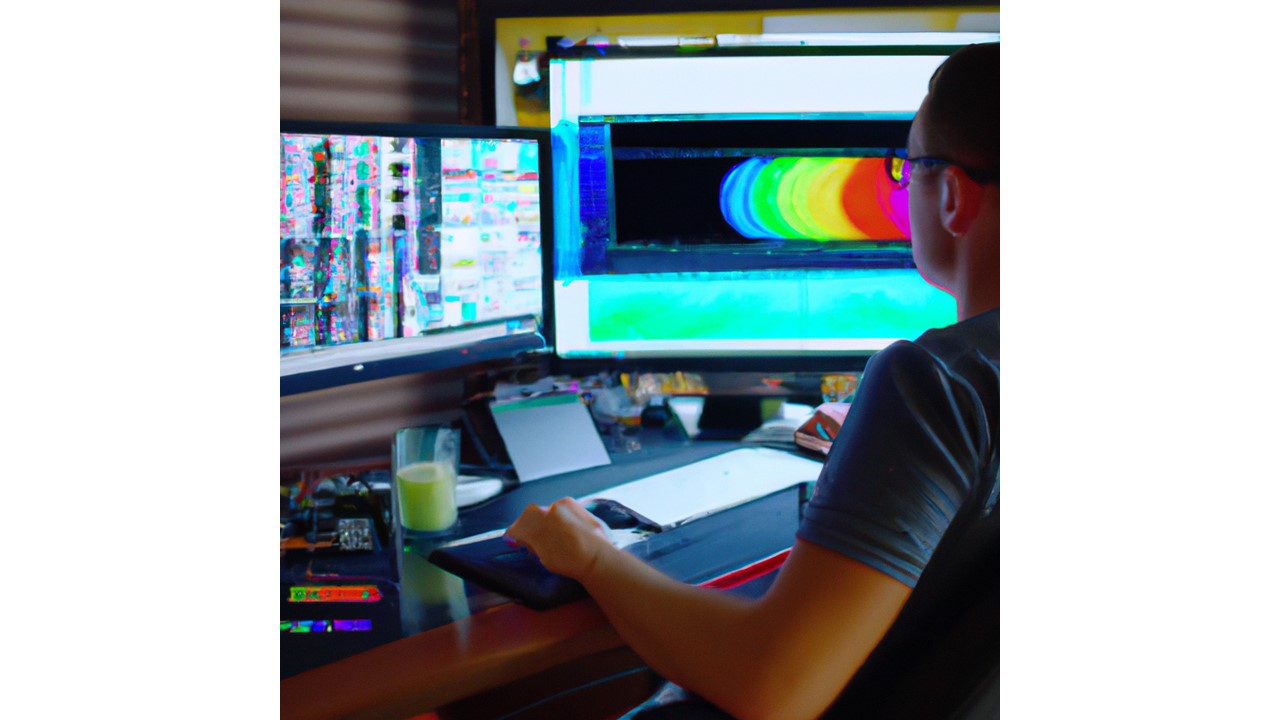
In the world of marketing videos, compelling storytelling is key to capturing the audience’s attention. One of the most powerful tools to enhance an interview-based marketing video is the effective use of B-roll footage. B-roll serves as the visual glue that ties together narratives, reinforces messaging, and maintains engagement. However, the way B-roll is edited can make or break a marketing interview video. Here are expert editing tips to maximize the impact of your B-roll in marketing interviews.

1. Plan B-Roll with Intent

Before stepping into the editing suite, B-roll should be purposefully planned. It should align with the key themes of the interview and reinforce the main talking points. Editors should review the interview footage first and identify moments where B-roll can provide context, highlight an emotion, or add visual interest to what’s being said.

2. Maintain Visual Continuity

Seamless transitions between A-roll (interview footage) and B-roll are critical to a professional-looking edit. Ensure that B-roll clips match the flow of the interview by maintaining visual continuity in terms of lighting, color, and composition. This avoids abrupt visual shifts that could distract viewers.

3. Use B-Roll to Cover Edits and Jump Cuts

In interview-based marketing videos, jump cuts can disrupt the flow and make the content feel disjointed. Using B-roll as a cutaway technique helps smooth out these transitions, allowing the editor to remove filler words, hesitations, or off-topic tangents without viewers noticing any abrupt cuts.

4. Sync B-Roll with Key Soundbites

B-roll is most effective when it is used to complement rather than compete with the spoken content. Match B-roll to key phrases and soundbites from the interview. For example, if a subject talks about a hands-on customer experience, showing B-roll of a client interacting with a product or service reinforces the message visually.

5. Enhance Emotion Through Slow Motion and Close-Ups

If the goal is to evoke emotion, incorporating slow-motion shots or close-ups in the B-roll sequence can add a cinematic feel and deepen engagement. These techniques work particularly well for highlighting subtle expressions, product details, or immersive experiences.

6. Utilize Motion Graphics for Story Enhancement

Adding motion graphics or subtle text overlays to B-roll can further reinforce messaging. Lower thirds, infographics, or call-to-action elements placed over B-roll help provide additional context and make marketing interviews more informative and persuasive.

7. Avoid Overuse and Maintain Pacing

While B-roll is essential, overloading a marketing interview with excessive or irrelevant B-roll can be counterproductive. It’s important to strike a balance—ensuring that B-roll supports the narrative without overwhelming or distracting from the interviewee’s message.

8. Consider Audio Elements When Editing B-Roll

Sound plays a significant role in video editing. Background noises in B-roll footage should not interfere with the clarity of the interview dialogue. When necessary, use ambient sound, subtle background music, or audio crossfades to ensure a polished and immersive viewing experience.

9. Use B-Roll to Reinforce Brand Identity

B-roll is an opportunity to showcase branding elements. Whether it’s including shots of company logos, employees at work, or behind-the-scenes moments, ensuring that B-roll aligns with the brand’s visual identity strengthens brand recognition and credibility.

10. Test Different Sequences for Maximum Impact

The same set of B-roll clips can be arranged in various ways to evoke different emotions and engagement levels. A/B testing different sequences can help identify the most compelling version of the edit before finalizing the video.

Partner with Experts for Professional Marketing Videos

At St. Louis Video Production Studio, we understand the critical role of B-roll in crafting high-quality marketing interviews. Our team of expert videographers, editors, and producers ensure that your video content is professionally shot and seamlessly edited for maximum impact.

As a full-service professional commercial photography and video production company, we have the right equipment and creative crew service experience for successful image acquisition. Our expertise includes studio and location video production, editing, post-production, and licensed drone services to meet diverse media requirements. Whether you need a private custom interview studio setup, camera operators, or a large studio space with props, we have everything necessary to make your next marketing video a success. Our ability to repurpose photography and video branding ensures that your content gains maximum traction.

With over 40 years of experience, St. Louis Video Production Studio has been the trusted partner for businesses, marketing firms, and creative agencies throughout St. Louis. Contact us today to elevate your marketing interview videos with professional B-roll editing and production solutions.

314-604-6544

saintlouismostudios@gmail.com

Guide to Different Video Production Interview Techniques

When planning a video production, especially for interviews, it’s crucial to understand that there’s much more to it than simply pointing a camera and asking questions. Successful video interviews require careful consideration of the technical setup, the interview style, and the overall message you want to convey. Whether you’re creating a corporate video, testimonial, case study, or marketing piece, the way you approach an interview can dramatically affect the final outcome.

Use an external microphone to capture clearer audio and reduce distractions like echo or background noise. Make sure their internet connection is stable.

In this guide, we’ll explore different video production interview techniques, the best practices for each, and how the right technical setup can elevate your production. As an experienced videographer and photographer at St. Louis Video Production Studio, we’ve had the privilege of helping numerous businesses, marketing firms, and agencies craft compelling videos that capture the essence of their brand.

1. Traditional One-on-One Interview

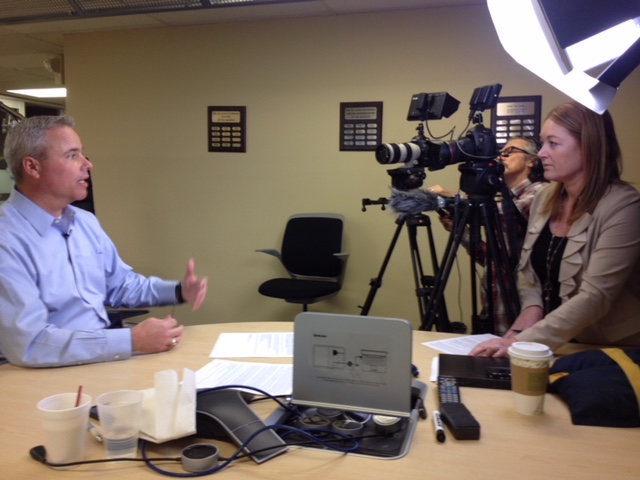
The traditional interview format is the most commonly used style. It involves a conversation between the interviewer and the subject, typically filmed with the interviewer off-camera. The subject speaks directly to the interviewer, but to the audience, it looks like they are having a conversation with someone out of frame.

Best Practices:

  • Framing: Ensure your subject is positioned slightly off-center in the frame (a technique called the “rule of thirds”) for visual appeal.
  • Lighting: Use soft, flattering lighting to eliminate harsh shadows and make your subject appear natural. A three-point lighting setup, with a key light, fill light, and backlight, is ideal.
  • Audio: Clear audio is essential. A lavalier microphone attached to the subject can ensure crystal-clear sound, avoiding any background noise from a handheld mic.

2. Testimonial Interviews

Testimonial interviews are often used for customer stories or employee experiences. These videos are highly effective for building trust, as they provide firsthand accounts of how your product or service has made a positive impact.

Best Practices:

  • Set the Scene: Testimonial interviews should feel natural, as though the subject is having an honest conversation with the audience. Use b-roll footage to illustrate key points.
  • Tone & Environment: Create a comfortable setting for your subject. A relaxed tone helps the person feel more at ease and speak freely.
  • Framing: Similar to the one-on-one interview, make sure to have the subject look slightly off-camera. Positioning the camera slightly to the side adds dynamism to the shot, making the conversation feel more authentic.

3. Panel Interviews

Panel interviews are perfect for discussions with multiple experts or stakeholders. These videos are often used in corporate settings for roundtable discussions or leadership insights. Panel interviews require multiple cameras to capture each person at the right time, ensuring a dynamic flow.

Best Practices:

  • Multiple Angles: Use at least two or three cameras to capture the action from different perspectives, alternating between wide shots and close-ups.
  • Microphones: Use individual microphones for each person to ensure high-quality sound. Overhead mics can also be helpful in capturing ambient sound.
  • Lighting: Lighting should be balanced across all panel members, but make sure each person is properly lit to avoid shadows or uneven exposure.

4. On-the-Go (Walking) Interviews

Walking interviews have become increasingly popular in corporate video production as they lend an informal, dynamic style. Filming while walking allows you to capture movement, making the interview feel more energetic and conversational.

Best Practices:

  • Stabilization: A handheld gimbal or Steadicam is essential for smooth footage when following the subject on the move. Avoid shaky camera work by using a tripod or mount when possible.
  • Audio: Use a wireless microphone system to allow for unrestricted movement while ensuring the audio remains clear.
  • Framing: Focus on wide shots to allow for movement within the frame. This style is best suited for relaxed, informal environments.

5. Virtual Interviews

In the age of remote work, virtual interviews have become commonplace. These interviews are conducted through video conferencing platforms like Zoom, and capturing high-quality visuals and sound can be tricky when the setup is outside of your control.

Best Practices:

  • Lighting: Encourage the interviewee to use soft, even lighting. Natural light from a window is preferable, but they may need to supplement it with additional lamps or ring lights.
  • Camera Positioning: Frame the subject’s head and shoulders. Ensure they’re centered in the frame, with their eye level aligned with the camera lens.
  • Technical Considerations: Use an external microphone to capture clearer audio and reduce distractions like echo or background noise. Make sure their internet connection is stable.

6. Documentary-Style Interviews

For a documentary feel, interviews are often interwoven with b-roll footage that illustrates the subject’s story. These interviews tend to be more immersive and personal, focusing on in-depth responses.

Best Practices:

  • Visual Storytelling: Use b-roll footage that complements what the subject is talking about. For instance, if someone is discussing their work, show shots of them in action.
  • Lighting: Keep the lighting natural but flattering. Avoid over-stylizing the scene to maintain the authenticity of the moment.
  • Tone: Let the subject speak freely. Focus on organic storytelling that engages the audience with real, raw emotions.

Why St. Louis Video Production Studio is Your Best Choice for Corporate Video Production

At St. Louis Video Production Studio, we understand that a great interview requires not only the right technique but also the best equipment and a skilled creative team. With decades of experience in full-service commercial photography and video production, we have the expertise to take your video projects to the next level.

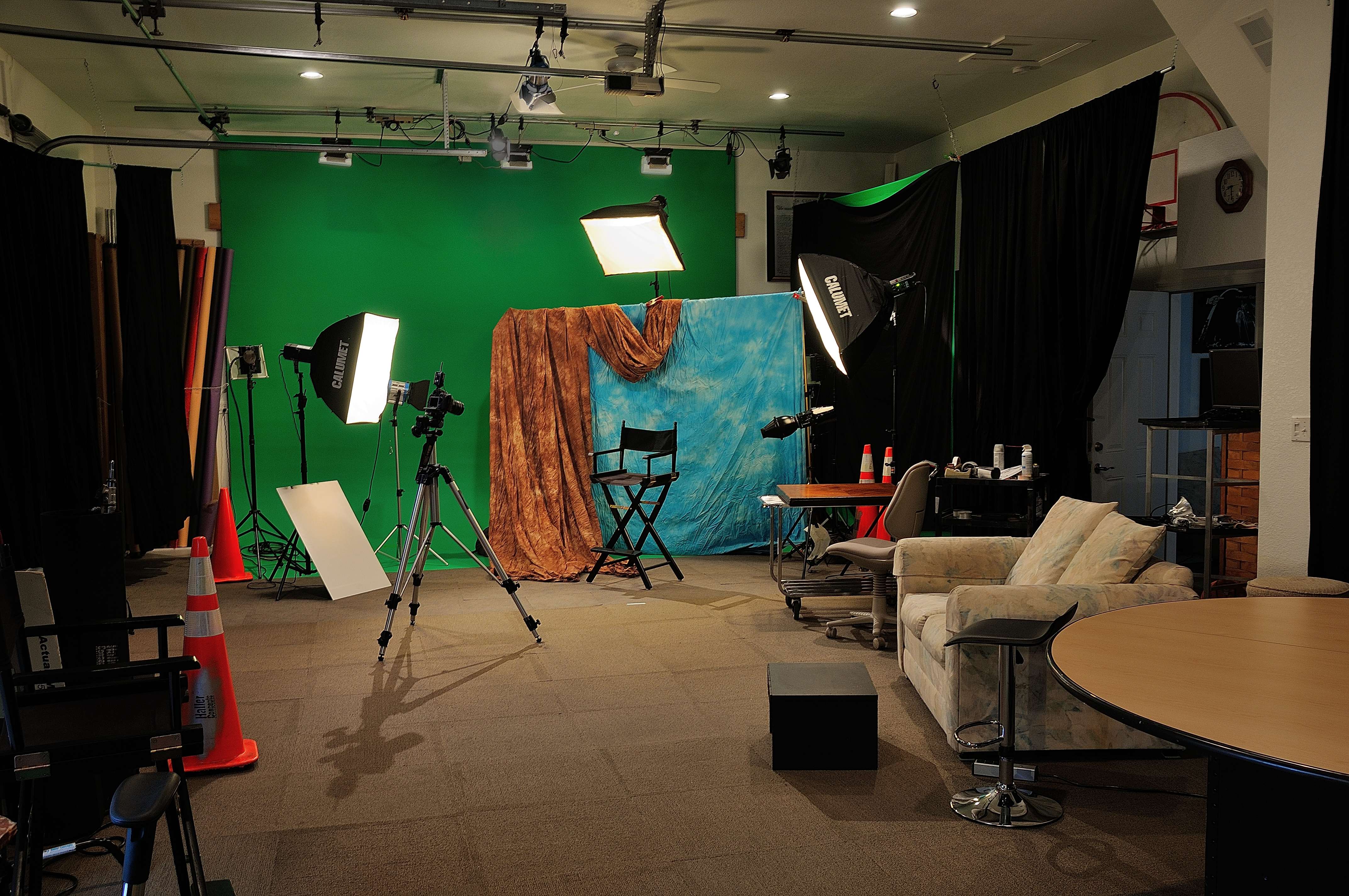
We offer comprehensive services, from studio and location video and photography to editing and post-production. Whether you’re shooting interviews, testimonials, or corporate videos, we have the right tools to create impactful content that resonates with your audience. Our private studio is equipped with custom lighting and visual setups, perfect for small productions or interview scenes. We also offer a flexible space large enough to incorporate props for your set.

Our team is well-versed in all file types and media styles, ensuring that your video is optimized for every platform. If you’re looking for something unique, we can even fly drones indoors, adding an exciting dynamic to your footage. Whether you’re creating corporate content or need a specialized setup, we provide everything from sound and camera operators to equipment for a seamless production.

Since 1982, we’ve worked with businesses, marketing firms, and agencies throughout the St. Louis area, customizing productions to meet diverse media requirements and repurposing your branding to maximize impact. At St. Louis Video Production Studio, our goal is to help you craft videos that not only look great but drive results.

Let us help make your next video production perfect. Reach out today to discover how we can bring your vision to life.

314-604-6544

saintlouismostudios@gmail.com